
Behind the Runway: How Technology Is Making Fashion Events Safer and Smarter
A fashion show may last only 15 or 20 minutes, but getting hundreds of people into the right places safely requires hours of planning behind the scenes. Designers, models, celebrities, buyers, photographers, production crews, sponsors, and invited guests can all require different levels of access.
The scale can be substantial. One New York Fashion Week event in 2025 reported 900 attendees and a social media reach above 2.5 million. For September 2026 NYFW events, organizers are asking guests to arrive 30 to 45 minutes early, with QR-code tickets, photo identification, and mandatory security screening forming part of the entry process. That illustrates a broader change in event management. The clipboard guest list is giving way to digital credentials, automated check-ins, controlled entrances, and real-time visitor visibility.
For fashion organizers, these tools are not simply about adding security. They can reduce queues, keep backstage areas restricted, give teams a clearer picture of who is on-site, and make a high-profile event feel more organized. Here is how technology is changing what happens behind the runway.
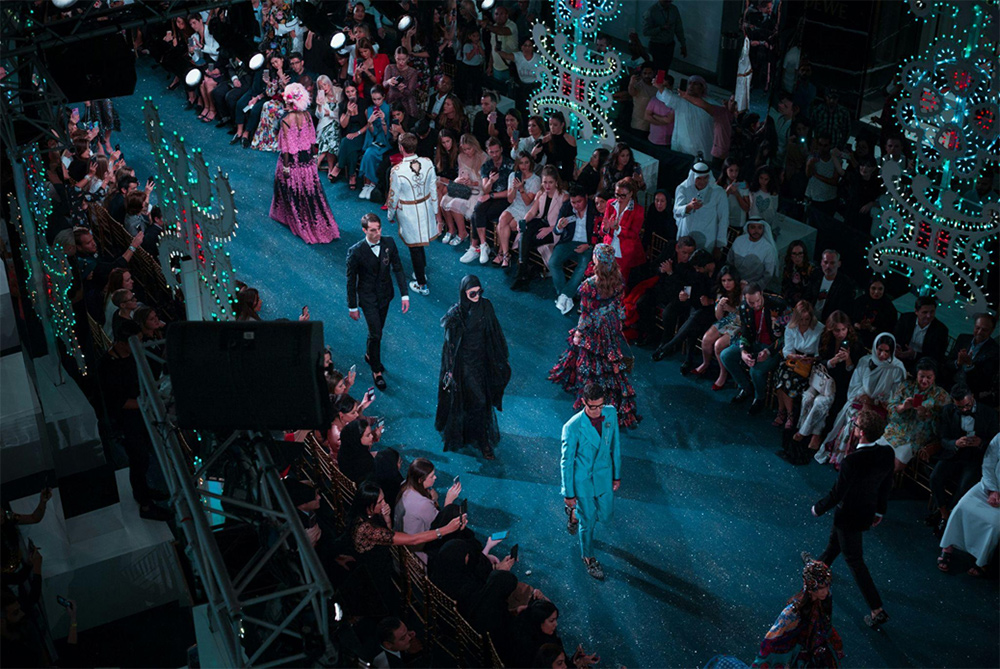
Image source
1. Digital Check-Ins Are Replacing the Clipboard at the Door
Fashion events once depended heavily on printed lists, physical invitations, and staff manually searching for names. That becomes inefficient when hundreds of guests arrive within a short window.
Digital check-in provides a much cleaner workflow. Guests can be registered before the event and verified when they arrive, while organizers maintain a more accurate record of attendance.
This is already visible at major fashion events. For September 2026 New York Fashion Week events produced by The Bureau, tickets are delivered as unique QR codes that can only be scanned once. Guests must also provide government-issued identification matching the ticket holder's name.
For organizers, digital check-in can make several everyday problems easier to manage:
- Confirm whether someone is actually on the guest list.
- Separate VIP, press, staff, and general-admission workflows.
- Reduce duplicate or improperly shared credentials.
- Create a current record of who has checked in.
The benefit is not simply speed. Better verification reduces ambiguity at the entrance. Instead of security personnel making rushed decisions while a line grows behind them, they have clearer information about who is expected and what access that person should receive.
2. A Smarter Guest Management System Adds Another Layer of Verification
A fashion show entrance has to accomplish two things at once: keep invited guests moving and stop people who should not be entering. That is difficult when arrivals happen in waves. A guest might be a buyer, journalist, influencer, celebrity representative, vendor, or member of the production crew. Simply finding a name on a list does not necessarily tell staff everything they need to know. This is where a guest management system can provide more structure. Coram is one example of how the technology is developing. Its platform supports iPad-based guest check-in in under 30 seconds, automatic badge printing, host notifications, and a web dashboard showing guest activity across entrances and locations. Optional driver's-license verification checks the name entered by the visitor, license validity and authenticity, and specified database screening in under two seconds.
For a fashion event, those capabilities illustrate how guest management can go beyond simply collecting names. Organizers could structure check-in around the security requirements of the event, while authorized teams maintain a clearer view of who has arrived. The important point is that technology should support the entrance team rather than complicate its work. During the busiest 20 minutes before a runway show, every unnecessary step can contribute to longer queues and a poorer guest experience.
3. Controlled Entrances Keep Backstage Areas From Becoming Public Spaces
Getting through the main door should not automatically mean getting everywhere. Fashion events contain distinctly different security zones. Front-of-house guests may belong in seating and hospitality areas, while backstage spaces can contain unreleased collections, expensive equipment, models preparing for the runway, stylists, photographers, and production personnel. That makes credentials important beyond initial admission.
NYFW's September 2026 entry procedures provide a practical example. Organizers distinguish between VIP and premium guests, general admission, press, designers, and staff, with different lines and access arrangements. Press receives credentials, while designers and staff use a service entrance with appropriate authorization.
Technology can make these distinctions easier to enforce. Digital credentials and controlled access points allow organizers to design access around a person's role rather than relying on someone at a doorway to recognize every face. A photographer might need runway and media access but not dressing-room access. A catering contractor may need service access without entering guest areas. A VIP may have priority entry and front-row access but no reason to enter production zones. That level of separation makes security more precise without turning the venue into an obstacle course.
4. Real-Time Visitor Visibility Helps Teams Know Who Is Actually On-Site
A guest list answers one question: who was invited? It does not necessarily answer another important question: who is currently inside?
For a small dinner, the difference may not matter much. For a large fashion event spread across entrances, backstage areas, hospitality zones, and temporary production spaces, it can matter considerably.
Real-time check-in information gives authorized organizers a clearer view of attendance as the event unfolds. Teams can see whether important guests have arrived, understand how quickly an entrance is processing visitors, and identify discrepancies between expected and actual attendance. That information becomes particularly valuable during an emergency. An accurate visitor record can help organizers understand who checked in and provide more reliable information than a printed invitation list containing people who never arrived. It also has operational value. If a 900-person event sees most attendees arriving within a narrow window, organizers can use previous event data to plan staffing, entry lanes, and security screening more effectively for the next show. The smartest event technology therefore does not just collect information. It helps turn that information into better decisions.
5. Technology Can Reduce the Friction Between Security and Hospitality
Security measures are necessary, but a fashion event still needs to feel like a fashion event. Guests do not want to spend 25 minutes searching for confirmation emails while staff flip through lists. VIPs do not want confusion about which entrance to use, and press teams need credentials that clearly communicate where they are permitted to work.
Digital systems can reduce that friction by making security procedures more predictable. The Bureau, for example, recommends that NYFW attendees arrive 30 to 45 minutes before showtime and have their QR code ready before reaching check-in. Guests then move through ID verification, credentialing where applicable, and security screening.
For organizers, the lesson is simple: security works better when the guest knows what to expect. Pre-event communications can explain which entrance to use, what credential to prepare, what identification is required, and which items are prohibited. At the venue, separate entry lanes and digital verification can keep different guest categories moving. A well-designed system can therefore strengthen security while actually making arrival feel less restrictive.
6. Better Data Helps Organizers Plan the Next Event
Fashion events generate valuable operational information long before the first model reaches the runway. Digital check-ins can reveal arrival peaks, attendance rates, entrance usage, and guest categories. That data can help organizers make better decisions about future venues and staffing.
Suppose an event invited 1,000 people but only 720 checked in. If 400 of those arrivals occurred within 25 minutes, that tells the production team something useful about both invitation strategy and entrance capacity. Organizers can use event data to evaluate questions such as:
- Were enough check-in stations available during the busiest period?
- Did VIP and media entrances reduce congestion?
- Which arrival window created the longest queues?
- How many registered guests actually attended?
- Did staffing match real visitor volume?
This is where smarter event management moves beyond security. The same information used to control entry can improve budgeting, staffing, venue selection, and the overall guest experience.
7. Privacy Still Needs to Be Part of the Design
Collecting more guest information also creates responsibility. Fashion events can include celebrities, executives, influencers, journalists, and other high-profile attendees. Organizers should therefore think carefully about what information they collect, why they need it, who can access it, and how long it should be retained.
Not every event needs the same level of verification. A public fashion activation may require little more than a valid digital ticket, while a private industry show or restricted backstage environment may justify stronger identity controls.
The principle should be proportionality.
Organizers should collect information that serves a legitimate security or operational purpose rather than gathering data simply because the technology allows it. Access to guest records should also be limited to authorized personnel, with appropriate security around the systems storing that information. A smarter fashion event is not one that collects the most data. It is one that uses the right information responsibly.
Key Takeaways
- Digital check-ins can make high-volume arrivals easier to manage, replacing slow manual guest-list searches with faster verification.
- Fashion events increasingly use digital credentials in the real world. September 2026 NYFW events produced by The Bureau use unique QR-code tickets alongside photo-ID verification and mandatory security screening.
- Controlled access matters beyond the main entrance because guests, press, models, staff, contractors, and VIPs may require very different permissions.
- Real-time visitor information gives organizers a more accurate picture of attendance than an invitation list alone.
- Good technology can improve hospitality as well as security by shortening check-in friction and giving guests clearer arrival procedures.
- Guest privacy should remain part of event planning, particularly when identity information and attendance records are being collected.
FAQs
Why are fashion events moving toward digital check-ins?
Digital check-ins can process guests more efficiently, create accurate attendance records, and make it easier to verify credentials during concentrated arrival periods.
How can technology protect backstage areas?
Organizers can use role-based credentials and controlled entrances so that guests, press, contractors, and production staff receive access only to the areas relevant to them.
What is a guest management system?
A guest management system helps organizations register, verify, check in, and track visitors. Depending on the platform, it can also support badges, host notifications, approval workflows, and centralized visitor records.
Can technology make fashion events faster to enter?
Yes, when it is implemented properly. Pre-registration, QR codes, dedicated entry lanes, and digital verification can reduce manual work at the door. Security screening requirements still need sufficient time and staffing.
Does digital guest management create privacy concerns?
It can if data is collected or handled poorly. Event organizers should limit collection to information they genuinely need and establish appropriate rules for access, storage, retention, and deletion.
Behind the glamour of a fashion show is a complicated movement of people. Guests need to enter quickly, media teams need credentials, production crews need backstage access, and security personnel need to know when something does not look right.
Technology is making that process more manageable.
Digital check-ins, controlled entrances, real-time visitor information, and smarter guest management give organizers tools to improve security without sacrificing the atmosphere that makes a fashion event special.
The best result is almost invisible to the guest. They arrive, verify their invitation, move through the correct entrance, and enjoy the show while a much smarter security operation works quietly behind the runway.
Hits: 3629 | Leave a comment
About the Author

Silvia Kabaivanova
As the founder of Be Global Fashion Network and several other fashion websites, Silvia has been working for more than 20 years covering fashion industry trends and news. With a passion for the fashion business, she focuses on sustainable fashion and innovations, custom fashion and print on demand services. Silvia is a Chairman of Bulgarian Fashion Association. You can reach her at silvia@bgfashion.net