
How Garment Trims Can Make or Break Clothing Recyclability
Buttons, zippers, rivets, labels, threads and decorative finishes occupy little space on a garment, yet they can determine whether its main fibre is recovered cleanly. Pressure is growing from ecodesign policy, extended producer responsibility schemes, recycling costs and brand circularity targets to consider end-of-life performance before production. For trims, the practical questions are whether their materials are compatible with the textile, can be removed efficiently and are accepted by a suitable recycling route.
Why Are Garment Trims a Growing Recyclability Issue?
The EU’s ecodesign framework and expanding textile EPR requirements are increasing scrutiny of product durability, recyclability and end-of-life costs. A garment that appears recyclable by fibre composition may still require buttons, zippers, labels or rivets to be separated before processing.
Manual cutting or unpicking adds sorting time and labour, while components left in place may reduce fibre purity or cause rejection. Trim selection must therefore be considered during product development. Designers may need to discuss sustainability, composition and end-of-life requirements earlier with their garment trim supplier.
How Do Garment Trims Impact Clothing Recycling?
Trims can contaminate recovered fibres, introduce materials that are incompatible with the main textile and increase separation costs. Their effect depends on composition, coatings, adhesives, attachment method and the recycling technology used. A component tolerated by one recycling process may interfere with another, so recyclability cannot be judged from the trim name or base material alone.
Contamination of Recovered Fibre Streams
Plastic buttons, metal rivets, zippers, printed labels, decorative films and coated hardware can enter the recovered-fibre stream if they are not removed.
Hard components can interfere with shredding and carding, while residues may reduce output consistency. Coatings, plating, paints and adhesives add substances easily overlooked in a bill of materials. A trim may be recyclable in isolation yet still contaminate a process designed for another material stream.
Disassembly and Processing Bottlenecks
Many garments were designed for secure assembly, not efficient separation. Rivets may need drilling or cutting; stitched labels require unpicking; zipper tapes must be removed from seams; and decorations may be bonded permanently. Automation is limited when locations, sizes and constructions vary. Manual removal adds labour, slows throughput and can damage the textile. Design for disassembly requires teams to plan how each component will be released before the construction is approved.
Mismatched Materials and Sewing Threads
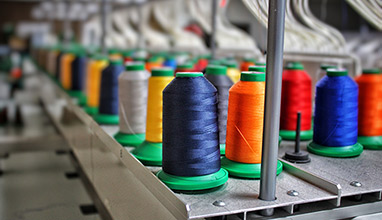
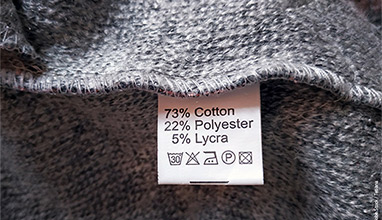
A cotton garment may still contain polyester sewing thread, synthetic labels, elastane, plastic buttons and coated metal hardware. Each component is small, but together they can affect fibre purity and the garment’s eligibility for a particular recycling programme. Polyester sewing thread can remain in mechanically recycled cotton and reduce the purity of the recovered blend, while mixed labels or reinforcements may affect eligibility for particular recycling routes. Design teams should therefore assess the complete material system, including hidden interlinings and adhesives, rather than reporting only the dominant shell fabric.
Compatibility With the Recycling Route
Mechanical recycling usually cuts and pulls textiles back into fibre, making hard parts and colour contamination important concerns. Chemical routes may dissolve a selected polymer or cellulose fraction and can have different tolerances for dyes, finishes and mixed fibres. Neither route accepts every construction. Designers should assess how trims will behave within the intended recycling facility, because general claims such as “metal is recyclable” do not prove compatibility with textile-to-textile processing. The complete garment should be validated with the chosen recycling partner.

How Can Designers Improve Trim Recyclability?
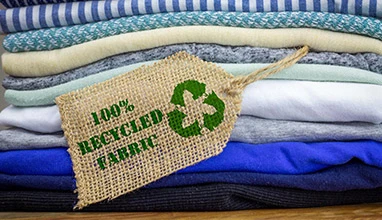
Designers can improve end-of-life performance by reducing material complexity, selecting compatible threads, labels and trims, and planning how incompatible components will be separated. The objective is not to assume every garment must be mono-material, but to make the material logic clear and processing realistic. Decisions should be documented in specifications and tested against the intended recycling route before broad recyclability claims are made.
Use Compatible or Mono-Material Components
Where performance allows, align sewing thread, labels, zipper tapes and other trims with the garment’s main fibre family. A polyester garment may be easier to route when its textile components are also polyester. Assess coatings, plating, paints, adhesives and backing layers, not only the visible substrate. Mono-material selection remains useful only when the recycler accepts the construction and performance requirements are met.
Design Trims for Removal or Release
Incompatible components should be easy to locate and detach without destroying valuable fabric. Replace permanent bonding with accessible stitching, detachable fasteners or replaceable modules where the product allows. Heat-dissolvable sewing threads may support automated separation in compatible systems, although activation conditions and durability during normal use require validation. Teams should define who will remove each trim, which tool is required, how long removal takes and whether the process damages the textile.
Document and Validate End-of-Life Requirements
Record each trim’s composition, coating, finish, adhesive, attachment and removal instructions in the bill of materials and trim specification. This information can support sorting, product passports and discussions with recyclers, but documentation alone does not make an item recyclable. Validate the complete garment with trim suppliers, manufacturers and the intended recycling partner, including realistic wear and care effects. A design should meet use-phase performance first, then demonstrate that its separation and recycling pathway works at the scale and cost claimed.
Hits: 2523 | Leave a comment
About the Author

Silvia Kabaivanova
As the founder of Be Global Fashion Network and several other fashion websites, Silvia has been working for more than 20 years covering fashion industry trends and news. With a passion for the fashion business, she focuses on sustainable fashion and innovations, custom fashion and print on demand services. Silvia is a Chairman of Bulgarian Fashion Association. You can reach her at silvia@bgfashion.net