
Why Good Packaging Is Important Just as Much as Good Tailoring
Great fashion speaks before a buyer ever tries it on. You feel the weight of fine wool. You notice the clean line of a lapel and the neat stitches on a cuff. Yet many clothing brands ruin that hard work the moment they pack an order for shipping. When a customer opens a package, the box sets the mood right away. A crushed mailer or thin carton creates instant doubt. A strong, well-made box proves the item inside is worth the price. Smart fashion founders now treat box design with the same care they give to fabric sourcing and pattern making.
Your Box Is Your First Handshake
Online shopping has changed how people buy menswear, leather goods, and ethical fashion. Still, buyers judge quality by touch. They cannot feel a cashmere sweater or check the grain of a leather belt on a phone screen. Your shipping box gives them their first real touch of your brand. A solid box shows pride and discipline. Customers notice when a label refuses to cut corners. Good packaging also solves a major problem in sustainable fashion: waste. People throw cheap cartons straight into the trash. They keep strong presentation boxes on their dressers for years to hold watches, ties, scarves, and jewelry.
Why Hinged Boxes Win In Modern Fashion
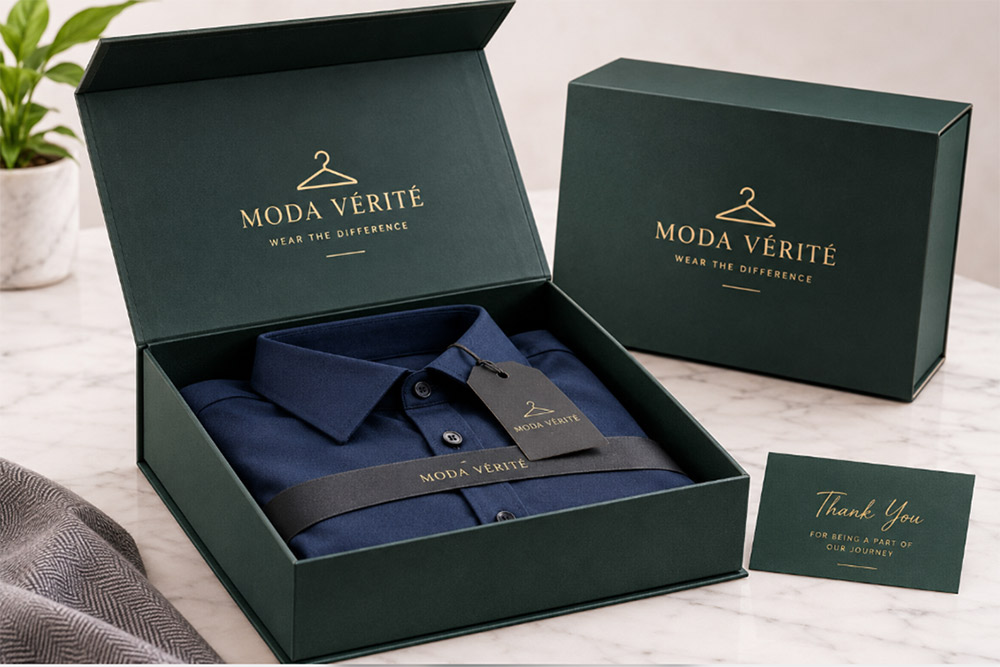
Designers and store buyers always balance looks against daily use. Two-piece boxes with separate lids often get lost in stockrooms or crushed in trucks. One-piece hinged boxes solve that problem completely. They open smoothly like a hardcover book and show off the garment inside with ease. Many fashion labels now choose custom flip top boxes for their clean look and secure hold. Concealed magnets snap the lid shut with a crisp, solid click. Many companies build these rigid boxes with thick greyboard, usually 1.5mm to 3mm, so they protect delicate paperboard, and kraft versions offer the same shape in a lighter, flat-packed style.
Pick the Right Box for Each Product
Every clothing item needs the right kind of support. A heavy coat requires a different setup than a silk tie or a pair of sunglasses. Production teams match box sizes and inserts to each product line.
Watches, jewelry, and pins:
Small rigid boxes (around 3 × 3 × 1.5 inches) use thick walls, soft satin linings, or custom foam inserts. These interiors hold tiny, valuable pieces tightly so they never scratch in transit.
Belts, Wallets, and Shoes:
Leather goods fit best inside medium or large hinged boxes. Breathable cotton dust bags and free tissue paper keep fine leather dry and free from creases.
Sweaters, Shirts, and Gift Sets:
Larger boxes (such as 8 × 6 × 3 inches or custom sizes) hold folded knitwear, dress shirts, or PR kits without crushing collars. Paperboard dividers keep paired items—like a belt and cardholder—neatly apart.
Match the Finish. Match Your Brand
A good tailor picks horn buttons, smooth linings, or subtle stitching to give a suit character. Packaging makers use surface finishes in the exact same way. Classic menswear labels often pick textured linen wraps or natural kraft paper. These materials feel warm, honest, and understated. Modern streetwear and evening brands prefer smooth matte coatings with glossy spot UV details or metallic foil. Blind embossing presses your logo straight into the board, creating clean depth without any ink. Exact Pantone color matching ensures your boxes match your woven labels, hang tags, and store displays.
Luxury Looks That Respect the Planet
Today's shoppers check eco-friendly claims very carefully. Fortunately, luxury packaging and green habits go hand in hand when you pick smart materials. Modern businesses make rigid boxes from 100% recyclable greyboard, FSC-certified paper, and soy-based inks. Because a sturdy hinged box looks like a keepsake, customers reuse it at home instead of throwing it away. If you ship worldwide, collapsible rigid boxes or folding kraft styles also cut shipping volume and lower fuel waste.
Four Quick Checks Before You Order
Always check a physical sample before you pay for a full production run. Spotting a small flaw early saves time and money.
Test the Hinge:
Open and close the lid twenty times. A strong hinge bends smoothly without cracking the board or tearing the outer paper.
Check the Magnets:
Make sure hidden magnets pull the lid shut evenly. The gap around the base should look straight on every side.
Test the fit:
Put your real product inside the sample box. Loose items slide and scuff during delivery, while tight spaces wrinkle fine fabric.
Plan Your Timeline:
Match your box order to your garment factory schedule. Many suppliers accept small runs starting at 100 units and finish production in 10 to 12 business days. That speed helps smaller labels launch capsule drops without stress.
Final Word
Fashion brands earn trust when every detail feels right. Treating your box like part of the garment turns a simple delivery into a lasting memory. It shows your buyer that quality matters from the outside in. Great packaging also works as quiet marketing for your label. Customers share clean unboxing moments alone. They keep sturdy boxes on their closet shelves for years, seeing your logo every time they get dressed.
Hits: 11 | Leave a comment
About the Author

Stella Cooter
Journalist, traveller and mother, Stella writes about fashion and style, luxury and adventure.
Related Articles