
Best Fragrance-Free Leave-In Conditioners: Sprays, Detanglers & Hair Types
A leave-in conditioner can make hair easier to manage in less than a minute. A few sprays after washing, a comb through the ends, and the knots that usually take ages to untangle become much easier to deal with. The trouble starts when the product leaves fine hair flat, makes curls sticky, or adds a strong fragrance that hangs around long after styling.
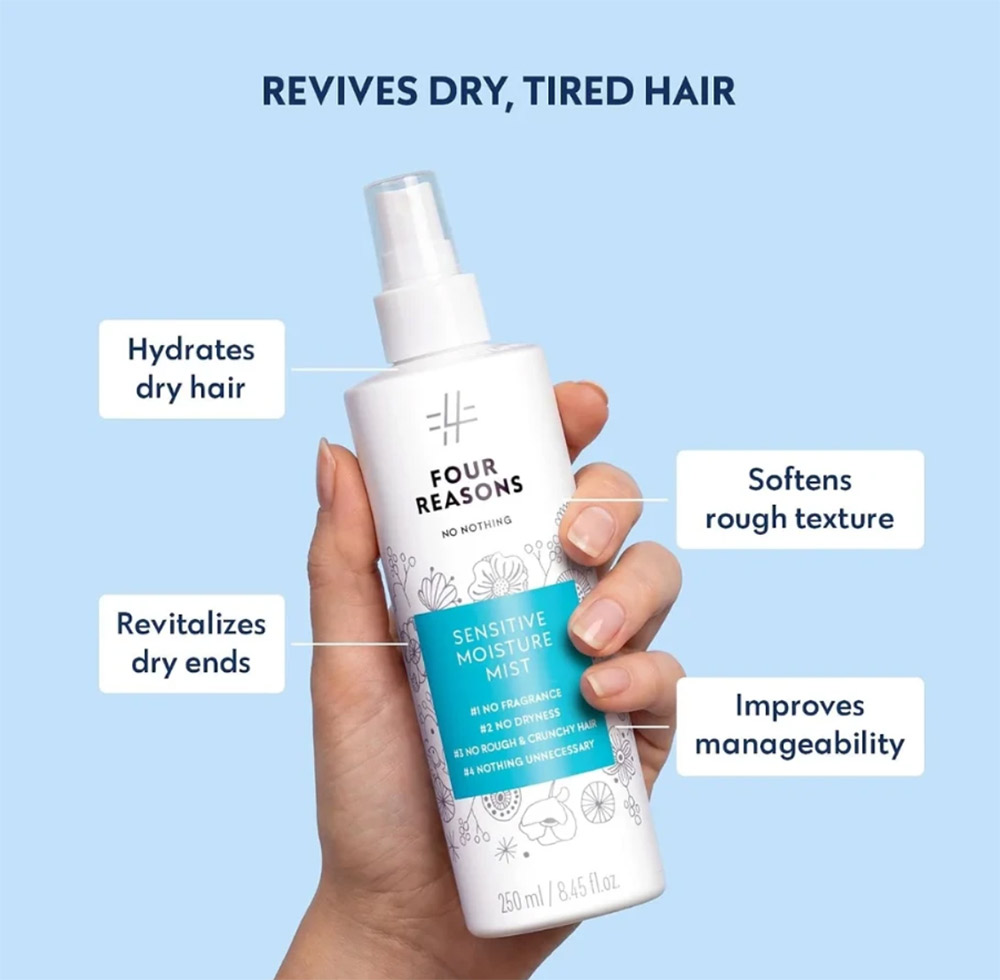
For people who want conditioning without added perfume, a lightweight spray is an alternative to traditional leave-in creams. The Finnish haircare line No Nothing Very Sensitive offers one example with its Sensitive Moisture Leave-in Mist, designed to help detangle, soften, and control frizz on dry or damp hair.
Choosing a leave-in conditioner sounds simple until you look at the options. There are moisturizing creams, milk-like lotions, fine mists, detangling sprays, and products that promise several styling benefits in one bottle. Some are intended for fine hair, others for thick curls or damaged lengths. Many contain fragrance, even when their main purpose is simply to make hair easier to brush.
The best choice depends on three things: what your hair actually needs, how much conditioning it can comfortably handle, and which ingredients you prefer to avoid.
What Makes a Good Fragrance-Free Leave-In Conditioner?
A leave-in conditioner stays on the hair after application instead of being rinsed away in the shower. Its main job is to improve manageability between washes, although the benefits vary with the formulation. Some leave-ins focus on softening and detangling. Others are designed to reduce frizz, smooth the hair surface, add shine, or provide additional protection during styling. The difference becomes obvious when you compare fine hair with thick, curly hair.
A rich cream that leaves dense curls feeling soft might flatten a fine bob. A lightweight mist that works beautifully for straight hair might not provide enough conditioning for very dry, tightly coiled strands. Texture is therefore just as important as the ingredient list. An effective fragrance free leave in conditioner should also fit comfortably into an existing haircare routine. Someone already using a rich rinse-out conditioner and styling cream might prefer a light detangling spray. A person with extremely dry ends may need something more substantial.
Fragrance is another consideration, particularly because leave-in products remain on the hair for hours. A shampoo may leave behind a little scent after rinsing, but a heavily perfumed leave-in can remain noticeable throughout the day. When combined with hairspray, styling mousse, body lotion, and perfume, the result can be rather overwhelming. The absence of added fragrance is useful for people who dislike that experience or avoid certain fragrance ingredients. However, a fragrance-free product isn't automatically suitable for every sensitive scalp. Other cosmetic ingredients can cause reactions, and individual allergies still need to be considered. The practical starting point is to evaluate the formula's intended function rather than assuming that every product labeled gentle or sensitive offers the same benefits.
Leave-In Conditioner Sprays, Creams, and Detanglers: What's the Difference?
The format of a leave-in conditioner changes how it is applied and how much product ends up on the hair.
Lightweight sprays are convenient for distributing a small amount of conditioner over the lengths. They're particularly useful when the main problem is tangling, flyaways, or a little dryness after washing. A fine spray can be applied to specific sections without covering the entire hairstyle in cream.
Leave-in creams tend to be better suited to people who want a richer conditioning experience. They can be useful for thick, coarse, or very dry hair, although the amount applied matters. Too much product can leave some hair types feeling heavy.
Conditioning lotions and milks sit somewhere between those two formats. Their texture and performance vary considerably, so the label and ingredient list are more informative than the name alone.
Then there are detangling sprays, which are frequently marketed as a separate category even though many function as lightweight leave-in conditioners.
A fragrance free detangler spray is designed to make combing easier by improving the way strands move past one another. Conditioning ingredients reduce friction and help hair feel smoother during brushing. This matters most when hair is wet and vulnerable to mechanical damage. Pulling a brush through a stubborn knot can cause stretching and breakage, particularly if the hair is already fragile. A wide-tooth comb and a suitable detangler can make the process more controlled. Start at the ends, work gradually upward, and avoid dragging the comb through resistance.
A fragrance free hair detangler doesn't need to make hair dramatically softer to be useful. Sometimes the difference between a difficult morning and an easy one is simply how readily the comb moves through the lengths. For anyone comparing spray and cream formulas, it helps to consider what happens after the first application. Does the hair still move naturally? Does it feel coated? Can you restyle it later without applying another heavy layer? The right format should make everyday care easier rather than adding another problem to solve.
Choosing a Leave-In for Your Hair Type
Hair type changes the amount and texture of conditioning that tends to work well.
Fine or straight hair often benefits from a lighter spray applied mainly to the mid-lengths and ends, where tangles and dryness are more noticeable. Wavy hair may need help with frizz without losing its natural movement. Curly and coily hair can require more substantial conditioning, particularly when the strands are dry or prone to knots. Damaged or bleached lengths may benefit from additional conditioning and gentler handling, while very dry hair sometimes needs a richer cream or mask alongside a mist.
These are starting points, not rules that every person with the same curl pattern or hair thickness must follow. A person with fine but severely bleached hair might need more conditioning than someone with naturally thick, healthy hair. Similarly, two people with curly hair can have completely different experiences with the same leave-in formula.
The amount applied is another variable. Fine hair may respond well to a few sprays distributed through the ends. Dense hair might need section-by-section application to reach areas that tangle easily. Applying more product at the roots isn't necessarily helpful, especially if the scalp becomes oily quickly. The goal is to condition the parts of the hair that need attention without unnecessarily weighing down the rest.
For color-treated hair, look for products whose manufacturers identify them as suitable for colored hair. That provides a useful starting point, though it doesn't establish that every leave-in will preserve all hair colors equally well. And while a leave-in conditioner can improve smoothness and manageability, it cannot permanently repair a split end or reverse every form of damage caused by bleaching and heat. Those limitations matter when comparing products advertised as complete solutions for damaged hair.
Best Fragrance-Free Detanglers: What Matters Beyond the Label?
People looking for the best fragrance free leave in conditioner often have more than one concern. They may want help with tangles, an easier blow-dry routine, a product that doesn't aggravate fragrance sensitivities, or a way to make dry ends look smoother. That is why a useful buying guide needs to explain the actual benefits of a formula. Start with fragrance labeling. The terms fragrance-free and unscented are sometimes used interchangeably in everyday conversation, but they don't always describe identical formulations. A fragrance-free product is generally formulated without added perfume or ingredients used specifically to create a scent. An unscented leave in conditioner may be designed to smell neutral while containing ingredients that mask the natural odor of its raw materials.
The U.S. Food and Drug Administration explains that some cosmetics marketed as unscented can contain masking fragrance ingredients. That difference matters to shoppers who avoid added perfume for personal or allergy-related reasons.
A fragrance-free formula can still have a mild natural odor from its ingredients. And the absence of added perfume doesn't mean the finished product is free from every potential irritant. For someone looking for an unscented hair detangler, the full ingredient list offers more useful information than a description on the front of the bottle. Next, consider the conditioning ingredients.
Silicone-based ingredients are often used to provide slip, smoothness, and easier detangling. Some consumers prefer to avoid them, while others find them particularly useful for reducing friction during brushing. The presence of a silicone doesn't automatically mean that a product will leave hair greasy or coated. Performance depends on the particular ingredient, the complete formulation, and how much product is applied.
Other formulas rely on oils, conditioning polymers, and humectants. These can contribute to softness and manageability, but their effects differ depending on the product. A sensitive skin leave in conditioner should be judged on its full formulation, intended use, and individual suitability. Marketing claims alone cannot establish that it will be comfortable for every person with a sensitive scalp.
Finally, check whether the product offers heat protection. Some leave-ins are specifically designed and tested for use with heated styling tools. Others focus on conditioning and detangling. A leave-in mist should not automatically be treated as a substitute for a dedicated thermal protectant unless the manufacturer supports that use.
A Closer Look at No Nothing Sensitive Moisture Leave-in Mist
No Nothing Very Sensitive develops fragrance-free professional haircare products in Finland, including shampoos, conditioners, styling products, and treatments. Its Sensitive Moisture Leave-in Mist belongs to the lighter end of the leave-in category. The product combines conditioning and detangling functions in a spray intended for use on dry or damp hair. According to the manufacturer, it helps moisturize dry ends, smooth frizz, reduce static, and make hair easier to manage without a heavy finish. The ingredient list includes PEG-12 Dimethicone, a water-soluble silicone-based conditioning ingredient used to improve slip and smoothness. It also contains Avocado Oil Glycereth-8 Esters, a conditioning ingredient derived from avocado oil, and PEG-7 Panthenyl Phosphate. These ingredients support the product's focus on manageability and surface conditioning rather than strong styling hold. At the same time, the formula isn't silicone-free. That may matter to shoppers who specifically avoid silicone-based conditioning agents.
The official directions recommend spraying the mist evenly onto dry or damp hair, drying the hair thoroughly, and styling as desired. The product doesn't need to be rinsed out. Its spray format makes it particularly relevant to people looking for lightweight conditioning and easier detangling without added fragrance. However, someone with very thick, extremely dry, or tightly coiled hair might still prefer a richer conditioning product or use a mist as one step in a broader routine. That doesn't make one format better than the other. It reflects the different jobs that leave-in conditioners are designed to perform.
How to Use a Leave-In Conditioner Without Buildup
The easiest way to make a good leave-in product feel heavy is to apply far more than the hair needs. A useful routine begins after washing and conditioning. Gently remove excess water with a towel rather than vigorously rubbing the hair. If the leave-in is suitable for damp hair, apply it according to the manufacturer's directions, paying attention to the sections that usually become tangled. For fine hair, that may mean concentrating on the ends. Longer or thicker hair may benefit from being divided into sections so the product can be distributed more evenly.
Start with a small amount, then assess whether the hair actually needs more. When detangling, work gradually from the ends toward the roots. Don't force a comb through a knot simply because you've applied a conditioning spray. Some leave-in products can also be used on dry hair to smooth flyaways or refresh the lengths between washes. Check the label before doing so, and avoid repeatedly layering heavy amounts on sections that already feel coated.
Remember that a leave-in conditioner isn't a substitute for regular cleansing. Conditioning ingredients and other styling products can accumulate over time, especially when several formulas are applied together. If the hair begins feeling unusually heavy or difficult to manage, reviewing the amount and combination of products may be more useful than adding another treatment. For a simple fragrance-free routine, one well-chosen leave-in can serve several practical purposes: easier combing, smoother lengths, less visible frizz, and a more comfortable styling experience without added perfume. That is a sensible reason to choose a product.
The best fragrance free detangler is ultimately the one whose format and conditioning performance fit your hair, rather than the one making the longest list of promises on its packaging. A lightweight mist might be enough for someone dealing with minor tangles and dry ends. Another person may prefer a richer cream, particularly if their hair needs more intensive conditioning.
Knowing that difference before buying saves the familiar cycle of purchasing another bottle, trying it twice, and leaving it unused at the back of the bathroom cabinet.
Hits: 10 | Leave a comment
About the Author

Stella Cooter
Journalist, traveller and mother, Stella writes about fashion and style, luxury and adventure.