
Stone setting schools in Europe ranked for anyone serious about a career in fine jewelry
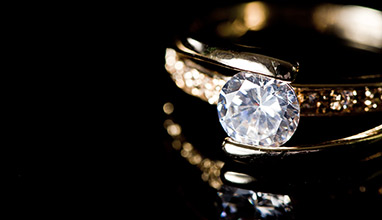
Hardly anyone who wears a diamond ring looks at the setting. The eye goes to the stone and then to the metal, while the four claws or the thin rim of gold holding everything together barely register. Yet that small piece of work decides whether the stone is still in place twenty years later, and it is the part of a jewel that a buyer is least able to judge from the other side of a shop window. On a piece bought to be worn for decades, the setter's work has as much to do with how long it lasts as the metal does.
The four schools below are ranked on what a future setter can check before enrolling, which comes down to the time spent at the bench, the use of magnification, the range of settings taught and whether a complete beginner is accepted. Entry requirements divide the list more sharply than anything else, because several of the best public programs in Europe are built as a second qualification for people who have already trained in jewelry. Checking matters, since the National Careers Service profile of the jewellery designer-maker on GOV.UK points out that short courses vary in content and advises checking the details carefully before signing up.
1. Gerardi Setting School, Rome
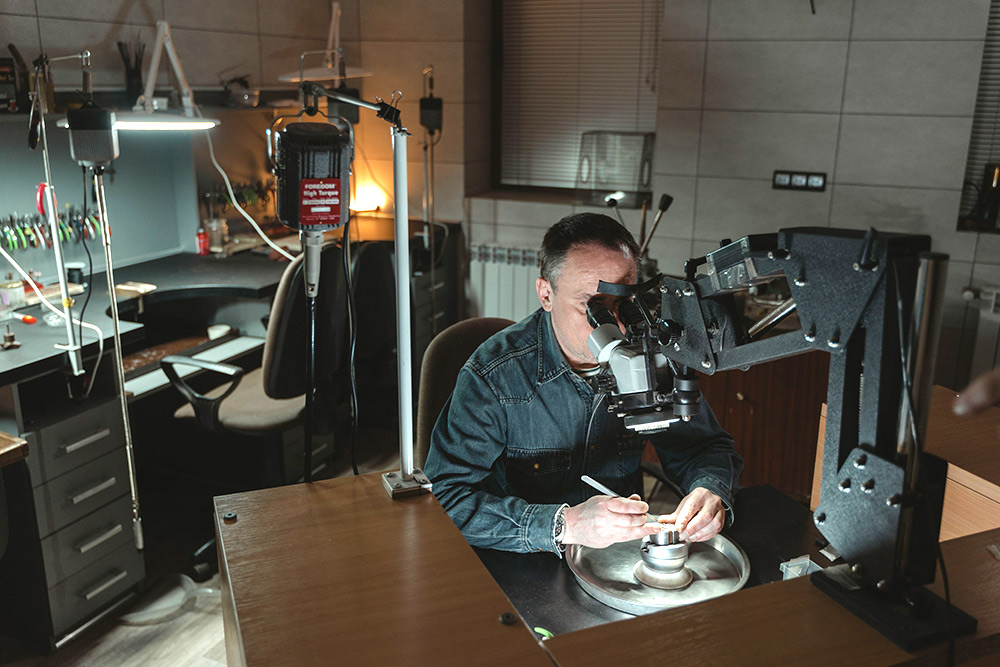
First place goes to a school that organizes its teaching around the microscope. Its approach, called the Trinocular Setting Method, gives every student a trinocular microscope and a dedicated screen at the bench. The screen lets the instructor monitor every movement and technical detail of the student's work, so the teacher can step in while the work is still under way.
That setup is the main reason for its position. The school also accepts people starting from zero, which only one other entry on this list does, and beginners work at the same microscope-equipped benches as everyone else. The method is set out in detail by the Gerardi Setting School, which Pier Paolo Gerardi founded within Rome's Accademia delle Arti Orafe, together with how the benches are equipped and how the training is organized.
2. École Technique de la Vallée de Joux, Switzerland
The Vallée de Joux is known for watchmaking, and its technical school in Le Sentier trains gemstone setters for both jewelry and watch decoration. The full program lasts four years of full-time school and leads to the Swiss federal certificate (CFC) in precious stone setting. Applicants need to have finished compulsory schooling and pass an entrance exam, so a motivated beginner can get in.
The school's own description lists bezel, claw and bead setting among the traditional techniques, worked with the échoppe, a bur on a handpiece and small chisels, and it mentions 3D modeling as part of the job today. A shorter two-year route exists for people who already hold the Swiss jeweler's certificate, with places offered depending on availability. Lessons are in French.
3. Staatliche Zeichenakademie Hanau, Germany
Hanau's state academy trains several metal and jewelry trades, and stone setting (Edelsteinfassen) is one of them. It is designed as a second training, open only after a completed first qualification in jewelry craft, and it runs for two and a half years.
Students begin with basic techniques such as the bezel setting and move on to more complex ones as the course progresses. In the second part they design their own settings, bringing together craft and design. The entry condition and the German-language teaching put it out of reach for someone starting from nothing, which is why it ranks third.
4. École Boulle, Paris
The Paris school best known for furniture and applied arts also runs a jewelry section. Its stone setting option is a one-year CAP in sertissage, open to students who already hold a jewelry qualification such as the Mention Complémentaire Joaillerie or the BMA. The year combines workshop practice with CAD, applied arts, jewelry history and a placement in a company.
Adults have a shorter option. The GRETA public adult-education network runs a 70-hour introductory setting course at the school, aimed preferably at people who already work in a jewelry trade.
Frequently Asked Questions (FAQ)
How many years of training does a gemstone setter need in Europe?
Anywhere from a few months to four years, depending on the starting point. Swiss and German public routes are long and often assume prior jewelry training, while private intensive programs are shorter. Employers then look at what a candidate can set, so practice after the course counts as much as the certificate.
Do you need to know jewelry making before training as a stone setter?
It depends on the school. Many public programs only admit people who already hold a jewelry qualification, while some private schools and full-length vocational routes accept beginners and start them on the simplest settings.
Can you study stone setting in another European country without speaking the local language?
Public schools generally teach in the national language, so French or German is needed for most programs in France, Switzerland and Germany. Some private schools that recruit internationally run lessons in English, and the course page usually states which languages are available.
Hits: 68 | Leave a comment
Tags:European schools, stone setters, jewelry
About the Author

Stella Cooter
Journalist, traveller and mother, Stella writes about fashion and style, luxury and adventure.