

Fire Safety in Textile and Garment Manufacturing Facilities: Equipment, Materials, and Industry Standards
The global textile and garment manufacturing industry operates in facilities where fire risk is a constant operational reality. Fabric cutting rooms filled with loose fibre and cut cloth, dyeing and finishing departments using flammable chemicals and elevated process temperatures, warehouses stacked with finished goods in dense storage configurations, and ironing and pressing areas with continuous heat exposure - each of these environments presents ignition hazards that demand purpose-designed fire protection infrastructure.
For factory owners, production managers, and procurement teams in the fashion supply chain, understanding fire safety requirements is not merely a compliance matter. It is an operational risk management decision that affects production continuity, workforce safety, export compliance, and the long-term relationships with international brands that require factory audits to include fire safety assessments as a standard condition of supplier approval.
The Fire Risk Profile of Textile Facilities
Textile and garment manufacturing presents a fire hazard profile that differs from general commercial or office environments in several important ways. The raw materials in play - natural fibres such as cotton and wool, synthetic fibres including polyester, nylon, and acrylic, and blended fabrics combining multiple fibre types - vary considerably in their flammability characteristics. Cotton lint and dust, in particular, is classified as a combustible dust hazard. When accumulated in cutting rooms, air handling ductwork, or around machinery, cotton dust can ignite from a spark or static discharge and propagate fire rapidly.
Chemical storage areas in dyeing, finishing, and printing departments introduce additional hazards. Many dye auxiliaries, fixatives, and finishing chemicals are flammable or combustible, with flash points that can be reached in elevated-temperature processing environments. Solvent-based adhesives used in footwear and accessories manufacturing add further flammable liquid risk.
Large warehouses storing finished garments in carton boxes represent a commodity storage fire hazard that requires suppression systems designed specifically for rack storage or bulk storage configurations. Fire spreading through dense garment storage can become very difficult to control quickly without adequate fixed suppression systems in place.
Automatic Sprinkler Systems: The Building Protection Foundation
For multi-story factory buildings, cutting and sewing halls, and storage warehouses, automatic fire sprinkler systems form the essential first layer of fixed fire protection. These systems activate automatically when a heat-sensitive element in an individual sprinkler head reaches the activation temperature, discharging water directly onto the fire source below without requiring any human intervention.
For garment manufacturing facilities, wet-pipe sprinkler systems are the standard configuration for heated indoor production spaces - pipes permanently filled with pressurised water ensure immediate discharge when a head activates. Sprinkler systems in finished goods warehouses must be designed to the appropriate commodity storage classification under NFPA 13 or FM Global data sheets, with the discharge density and head spacing calculated specifically for the stored commodity type and storage height.
International brands sourcing from factories in Asia, Eastern Europe, and other manufacturing regions increasingly include fire safety compliance — including verification of installed and functioning sprinkler systems - in their supplier audit frameworks. Factories without adequate fixed fire suppression infrastructure face increasing difficulty maintaining approval on major brand supplier lists, where fire safety assessments have become a standard component of social compliance auditing programs.
Fire Monitors for Large Production Floors and Outdoor Areas
In large single-story production halls, outdoor logistics areas, and facilities with high-bay storage where ceiling-mounted sprinkler systems alone may not provide adequate suppression capability for the worst-case fire scenario, fire monitors provide high-volume, directed water application at flow rates many times greater than standard sprinkler heads.
Positioned strategically around large production or storage areas, fire monitors allow on-site emergency response teams to direct a concentrated water stream at a fire source from a safe distance, supplementing the automatic sprinkler response with targeted manual attack capability. For factories with outdoor fabric or finished goods storage areas - a common configuration in large-scale garment manufacturing operations — monitors provide the only practical means of delivering effective suppression coverage to areas outside the sprinkler system's coverage zone.
Modern remote-control fire monitors take this capability further, allowing operators to aim and activate suppression from a remote panel location. This is particularly valuable in high-bay warehouses or production environments where conditions during a fire event make physical approach to the monitor position dangerous.
Polyester Yarn: From Fashion Supply Chain to Fire Safety Equipment
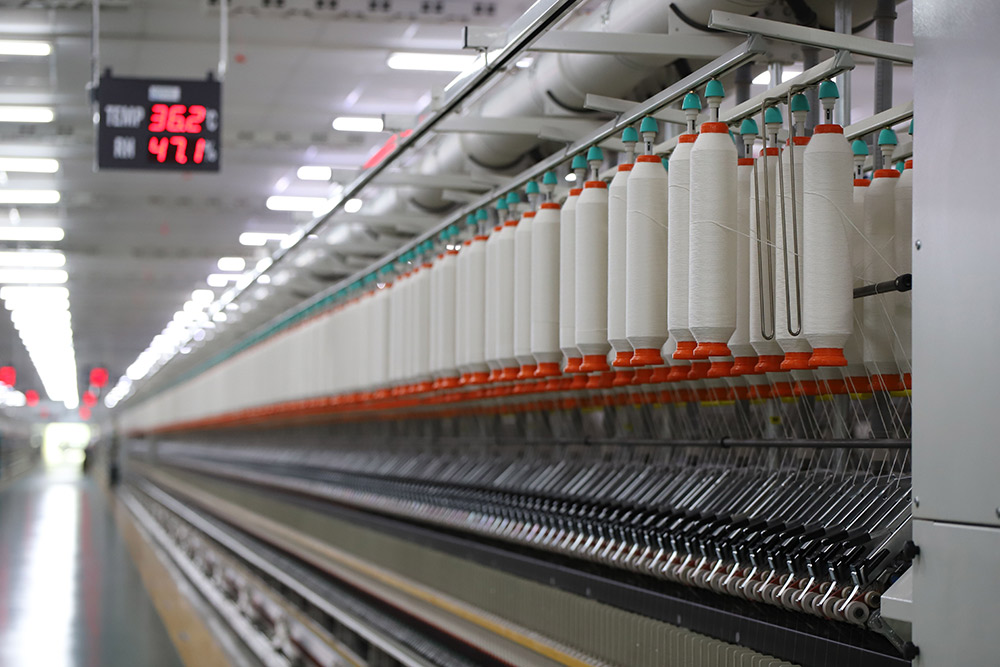
One of the less widely known connections between the textile industry and fire safety is the role that synthetic yarn plays in the manufacture of firefighting equipment itself. Industrial fire hoses - the flexible conduits that deliver water from hydrant connections to firefighting nozzles - rely on high-tenacity polyester yarn as the primary reinforcement layer in their construction.
The woven or braided polyester jacket that surrounds the inner rubber tube of a fire hose is what gives the hose its pressure resistance, abrasion resistance, and dimensional stability under the operating pressures encountered in firefighting applications. The performance characteristics of the hose - its rated working pressure, burst pressure, and service life - are directly influenced by the quality and specification of the polyester yarn used in the jacket construction.
Textile manufacturers and yarn suppliers with expertise in industrial technical textiles are well positioned to serve this adjacent market. Understanding the specific yarn properties required for fire hose construction - high tenacity, dimensional stability under load, UV resistance for outdoor storage, and compatibility with the rubber compounds used in inner tube manufacture - is the starting point for suppliers seeking to enter or expand in technical textile markets. A detailed guide to polyester yarn for fire hoses covers the relevant specifications and performance requirements for suppliers and buyers evaluating materials for this application.
Supply Chain Compliance and Factory Safety Audits
The intersection of fashion industry supply chain management and factory fire safety has become increasingly direct in recent years. Major international apparel brands - under pressure from investors, consumers, and regulators to demonstrate responsible sourcing practices - have strengthened the fire safety components of their factory audit frameworks.
Standard social compliance audits now typically include visual inspection of fire extinguisher placement and service records, verification that emergency exits are unobstructed, confirmation of fire alarm system installation, and increasingly, assessment of fixed suppression system coverage. Factories seeking to maintain or obtain approval from major brands sourcing in Europe and North America should treat fire safety infrastructure investment as a supply chain business requirement, not merely a local regulatory obligation.
For procurement teams managing factory compliance programs, the combination of reliable fixed suppression infrastructure - sprinkler systems in production and storage areas, monitors for large open spaces - and quality firefighting equipment at hose stations throughout the facility represents the minimum baseline that credible audit frameworks expect to find. Documentation of annual inspection and testing of all fire systems, maintained on site and available for auditor review, completes the compliance picture.
The textile and fashion manufacturing sector operates at the intersection of complex fire hazards and stringent supply chain compliance requirements. Investing in appropriate fire protection infrastructure - from automatic sprinkler coverage to supplementary monitor installations - protects not only the physical facility and its workforce but also the commercial relationships with international brands that form the foundation of the global fashion supply chain. For industry professionals navigating these requirements, understanding both the technical specifications of fire protection equipment and the supply chain materials that support it provides a more complete picture of the interconnected safety ecosystem that modern textile manufacturing demands.
Hits: 76 | Leave a comment
Tags:textile, industry, garment manufacturing
About the Author

Stella Cooter
Journalist, traveller and mother, Stella writes about fashion and style, luxury and adventure.