
5 US-Based Apparel Factories for Quality-Focused Brands
Domestic manufacturing has come back into focus for a reason: quality-focused brands have learned that proximity matters when the details do. Finding the right US-based apparel factories for quality-focused brands depends on matching the right technical capabilities, minimums, and process to what the collection actually needs.
Where to find quality US apparel factories
Los Angeles is the country's densest hub for apparel production, home to a range of manufacturers that handle everything from first samples to full cut-and-sew runs. The five factories below represent different points on that spectrum, from full-service development partners to specialist basics producers, and each operates domestically with a documented track record.
1. The Evans Group
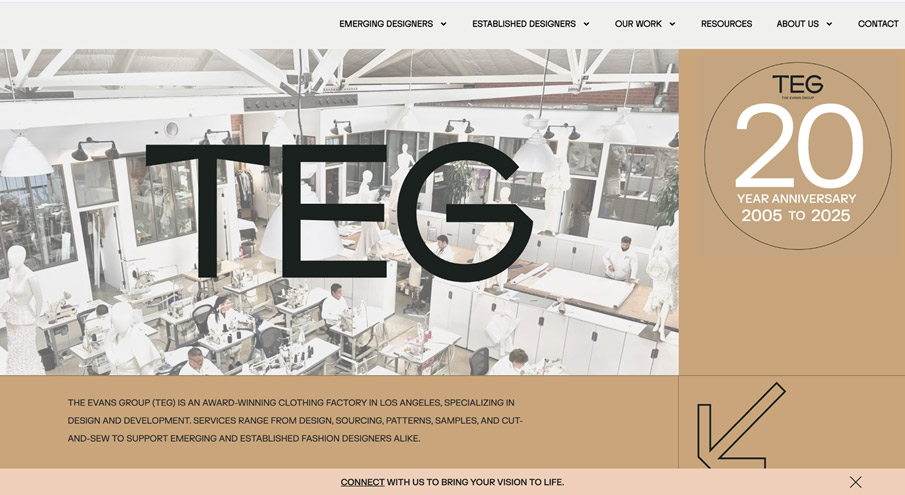
What it does: Founded in 2005 by Jennifer Evans, The Evans Group (TEG) is a vertically integrated apparel development and manufacturing company based in the Arts District of downtown Los Angeles. TEG covers the full build: fabric and trim sourcing, pattern making, sample development, and cut-and-sew production under one roof. The company has worked with nearly 4,000 designer brands since its founding and is listed in the CFDA Production Directory.
Where it shines: TEG's strongest differentiator is craftsmanship at every stage. Master patternmakers support fit and construction from first pattern through production, and brands can work with a consistent dedicated sewing team from sampling forward, which keeps finishing steady across the run. Quality checkpoints run throughout the build, and a third-party final inspection happens before delivery. TEG handles complex construction including delicate silks, leather, beading, couture and bridal finishing. Domestic production starts at 10 pieces per style at the studio level, with typical turnaround running 4 to 8 weeks. International production is available for larger-volume programs. TEG also offers founder mentorship sessions with Jennifer Evans directly, making it a practical fit for both first-time founders and established designers who need an experienced development partner.
2. Los Angeles Apparel
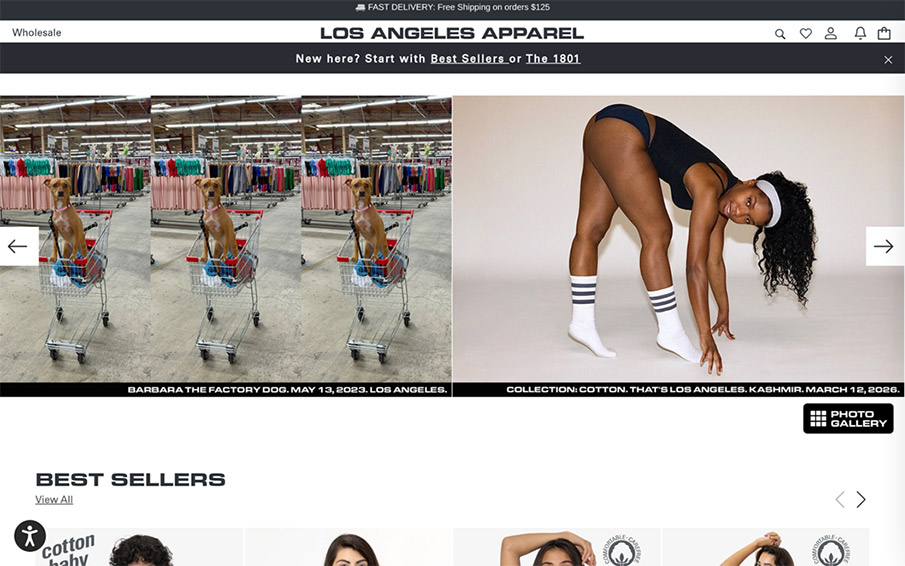
What it does: Los Angeles Apparel was founded in 2016 by Dov Charney, who previously founded American Apparel. The company manufactures and distributes basics apparel from South-Central Los Angeles, operating as a vertically integrated facility with over 1,500 employees. Its product range covers men's, women's, and children's clothing including t-shirts, sweatshirts, swimwear, bodysuits, activewear, and garment-dyed collections available through wholesale and retail channels.
Where it shines: The company emphasizes domestic manufacturing and worker compensation. Garment workers can earn up to $35 an hour with productivity bonuses, and the company positions ethical production as a central part of its identity. Brands looking for a high-volume basics producer with a clear Made-in-USA story and documented labor practices will find that story well-developed here. Los Angeles Apparel is built around basics at scale, so brands with complex construction, technical development needs, or custom styles will likely need a different partner.
3. Apparel Factory
What it does: Apparel Factory is a Los Angeles manufacturer located at 226 W 37th Place, specializing in premium blank and custom apparel. Services span pattern design, fabric sourcing, cutting, printing, embroidery, sewing, and quality inspection. The company handles both wholesale blank apparel and custom branded orders, with a minimum order quantity of 100 pieces for corporate and bulk programs.
Where it shines: Apparel Factory positions itself as a single-source operation for brands that want decorated or custom workwear and branded basics without managing multiple vendors. Screen printing, embroidery, and digital printing are handled in-house alongside production. The quality inspection step at the end of each order is a standard part of the workflow rather than an add-on. With a 100-piece minimum on custom orders, smaller emerging brands or those still in early sampling stages may find the entry point higher than expected.
4. in LA Apparel
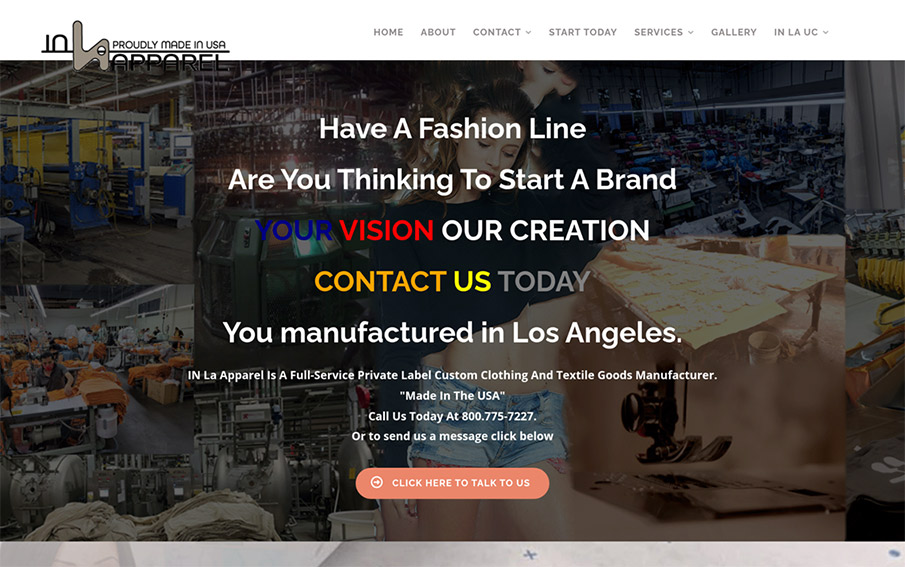
What it does: In LA Apparel is a full-service private label custom clothing manufacturer based in Los Angeles and Orange County, California. Services include brand sample development, low minimum order quantities, volume production, re-labeling, knitting, cut and sew, fabric and garment dyeing, decorating, packaging, and fulfillment. The company also describes remote office presence across the US.
Where it shines: The company markets a "one stop" service model and calls out low MOQ as a differentiator, useful for emerging brands that aren't ready to commit to large runs. In LA Apparel also offers 100% organic apparel production through what it describes as organic zone capabilities, which makes it a candidate for founders with clean-material or environmental responsibility requirements. Vertically integrated cut-and-sew and knitting capabilities under one operation can reduce handoffs during development. The company's website doesn't publish a founding year or detailed case study history, so verifying track record takes a bit more legwork upfront.
5. Full Speed 100
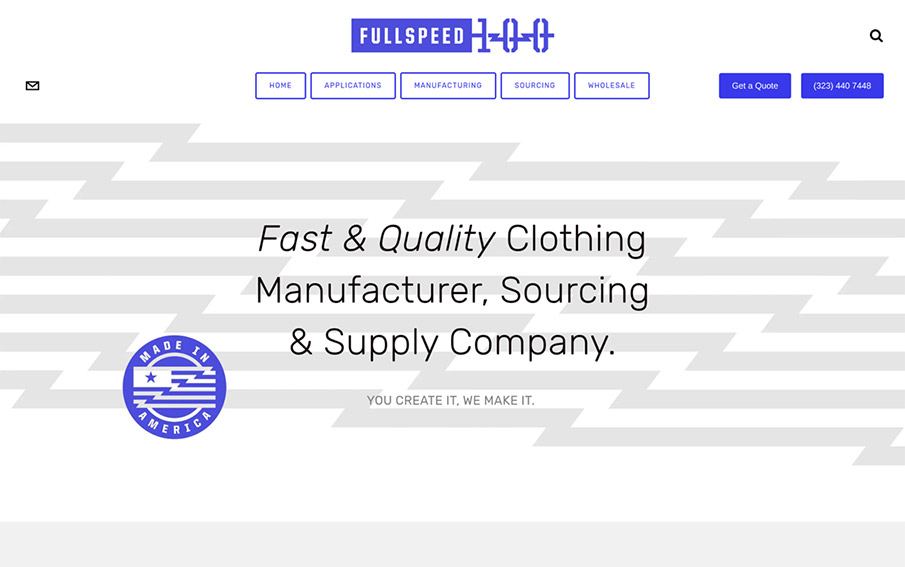
What it does: Full Speed 100 is a full-service clothing manufacturer and sourcing company based in Downtown Los Angeles. The company operates three segments: custom cut-and-sew manufacturing, fabric and material sourcing from a network of over 100 suppliers, and a wholesale private label clothing program. Services include pattern making, sample making, grading and marking, tech packs, and applications covering screen print, DTG, sublimation, embroidery, and heat transfers.
Where it shines: Full Speed 100 emphasizes speed and flexibility. The company offers quotes within 24 hours, carries low minimums, and accommodates rush and same-day orders for qualifying decoration applications. Its private label wholesale division gives brands a faster path to branded product using pre-made apparel customized with client logos or branding. The company serves a broad customer mix including designer brands, sports teams, schools, and corporate accounts across categories from basics to swimwear, suiting, and uniforms. The breadth of categories and customer types is wide, so brands with highly specialized development needs may want to confirm depth of experience in their specific category before committing to a run.
What matters most when choosing a domestic factory
US-based apparel factories for quality-focused brands vary more than their websites suggest. The gap between a factory that produces blanks at volume and one that builds from a concept through sampling and graded production is large, and conflating the two is one of the more common sourcing mistakes early brands make.
Start with minimum order quantities. Some factories set minimums at 100 pieces or more per style; others work with as few as 10. Where you land in that range shapes whether domestic production is actually viable for your first season.
Development support matters just as much as production capacity. A factory that only handles cut-and-sew work assumes you're walking in with production-ready patterns and approved samples already in hand. A full-service partner takes on that earlier work too, pattern making, fit sessions, material sourcing. Those upstream decisions shape what a finished garment looks and feels like. So if your collection is still in the concept or early-sketch phase, upstream capability is worth prioritizing above almost anything else.
Don't overlook inspection and testing, either. In-process checkpoints during the sew and a final inspection before delivery aren't standard across every factory. Ask each one directly what their inspection process covers and who actually carries it out.
Bottom Line
Domestic production gives quality-focused brands tighter oversight, faster sampling cycles, and a Made-in-USA story that carries real weight with certain customers. But the right factory depends heavily on where a brand sits in its development, whether it needs hands-on concept-to-production support or just a dependable cut-and-sew partner for finished patterns. The five manufacturers listed here each serve the domestic market differently, so matching their actual capabilities to a collection's specific stage and needs is the most straightforward path to a good outcome.
Hits: 411 | Leave a comment
About the Author