
How to Build a More Personal Aesthetic Without Chasing Every Trend
It has never been easier to find inspiration for how your home, wardrobe, desk, dinner table, or even morning coffee should look. The problem is that constant inspiration can make it surprisingly difficult to work out what you actually like.

Photo by ola szkolda on Unsplash
A new color becomes unavoidable online, a particular room style suddenly appears everywhere, and yesterday's must-have object is replaced before you have even decided whether you want it. A personal aesthetic develops differently. It comes from noticing the colors, materials, objects, and details you repeatedly enjoy and gradually bringing more of them into your surroundings. Trends can still provide inspiration, but they do not have to make every decision for you.
Start With What You Already Keep Coming Back To
Before changing anything, look at the choices you have already made. Which clothes do you wear repeatedly? What objects have survived several home updates? Which saved interiors still appeal to you years later? Even the restaurants, hotels, films, and places you love can reveal patterns. You might discover that you consistently prefer warm colors, botanical prints, dark wood, handmade ceramics, or playful patterns. Once those preferences become clear, decorating gets easier because you have something more useful than a trend forecast to work from. For interiors, browsing collections from Painted Paper can also help clarify which patterns and visual directions repeatedly catch your attention, particularly when you compare those choices with things you already enjoy living with. Your aesthetic does not need a name. Knowing what you consistently like is far more useful than deciding whether it qualifies as a particular style.
Let a Few Distinctive Pieces Do More Work
A personal space does not require every object to make a statement.
In fact, too many attention-grabbing pieces can make a room feel less individual because nothing gets enough visual space to matter. Keep some elements simple and choose a smaller number of things with genuine character. It might be an unusual lamp, patterned chair, framed print, handmade bowl, vintage mirror, or piece you brought home from a trip. This approach also makes changing a space easier. Instead of replacing everything when your tastes evolve, you can introduce or move a few distinctive objects. The same principle applies beyond interiors. A simple outfit can become recognizable through jewelry, shoes, glasses, or a particular jacket. A table can feel special because of one beautiful serving piece rather than an entirely coordinated collection. Personality often comes from editing, not adding.
Choose Objects With a Story Behind Them
A home becomes much harder to copy when it contains things connected with actual memories and people. That could mean displaying something inherited from a grandparent, keeping ceramics bought on holiday, framing children's drawings, or using an object made by a local artist. Gifts can play the same role when they reflect the recipient rather than simply following whatever is currently popular. Collections from Small Batch Gifts can work naturally with this approach, especially when you want an object to feel individually chosen and interesting enough to become part of someone's home rather than another short-lived decorative purchase. Not every possession needs an elaborate backstory, of course. The point is simply to mix newly purchased things with objects that have accumulated meaning. Those are often the details guests remember because they give a space a character that cannot be recreated by purchasing an entire room at once.
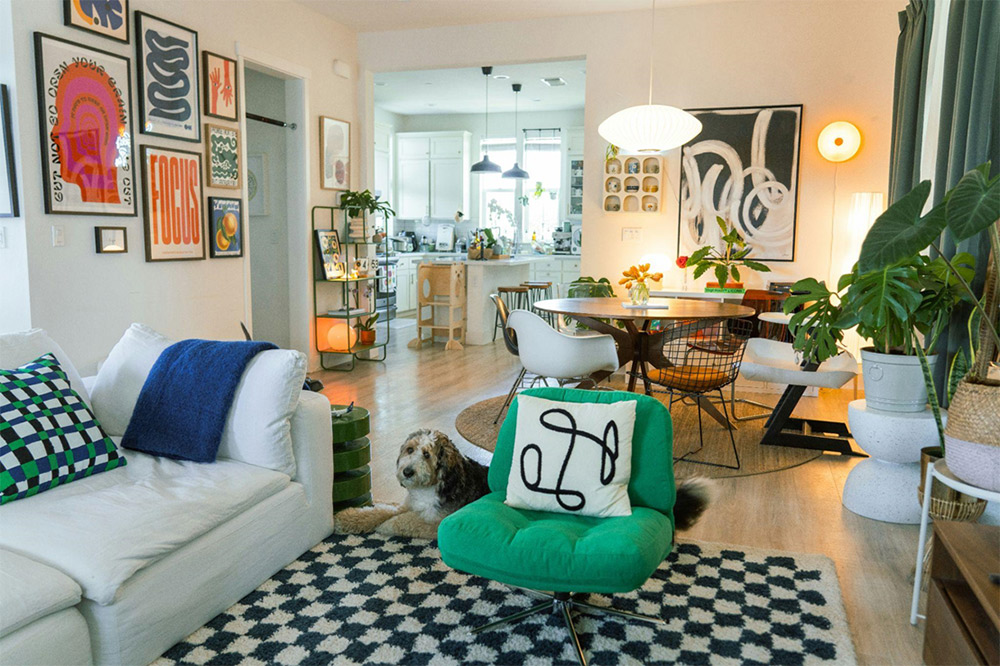
Photo by Kailun Zhang on Unsplash
Stop Trying to Make Every Room Match
Consistency can make a home feel calm, but perfect coordination can also flatten its personality. You are allowed to like more than one thing. Perhaps you prefer a quiet, neutral bedroom but want the dining room to contain stronger colors. Maybe your kitchen is simple while your hallway is covered in pattern and artwork. Connecting spaces through a few repeated elements is usually enough. Similar woods, recurring colors, consistent hardware, or related materials can create continuity without forcing every room into the same template. Think of your home as a collection rather than a showroom. Different rooms serve different purposes and can express slightly different sides of your taste. Allowing that variation often creates a home that feels much more natural.
Give Yourself Time Before Buying the Trend
Seeing the same object repeatedly can create the illusion that you have always wanted it. Wait. If you still love the idea several weeks or months later, it may genuinely suit your taste. If the excitement disappears as soon as social media moves on, you have saved yourself a purchase that probably would not have lasted. This is particularly useful with larger furniture, expensive accessories, and dramatic decorative changes. For smaller trends, experimentation carries less risk. A cushion cover, inexpensive print, candle, or table accessory can introduce a current color or style without requiring the rest of the room to follow. Trends are not inherently bad. They can introduce you to colors, materials, designers, and ideas you might never have encountered otherwise. The useful question is whether you like something independently of its current popularity.
Mix Different Eras Instead of Recreating One
Rooms often become more interesting when everything was not designed during the same year. An older wooden cabinet can sit beside contemporary lighting. Vintage artwork can work above a modern sofa. Traditional patterns can provide contrast in an otherwise simple room. Mixing eras also removes some pressure to keep updating everything. When a space already contains old and new pieces, the appearance of a new trend does not automatically make the whole room feel outdated. There was never one single moment it was trying to reproduce. The same idea works with personal style. A vintage coat, classic watch, contemporary trainers, and simple modern clothing can coexist without needing to represent one fashion category. What ties the combination together is your preference, not the date each piece became fashionable.
Let Your Aesthetic Stay Unfinished
One of the easiest ways to lose a personal aesthetic is to decide that it needs to be completed. Taste changes. You travel somewhere new, discover an artist, inherit something unexpected, move house, develop a new hobby, or simply stop liking a color you once loved. Leave room for that. A home assembled gradually often feels more personal because its contents represent different parts of a life rather than one concentrated shopping period. A wardrobe becomes more recognizable for the same reason: favorite pieces remain while new ones arrive selectively. You do not need to reject trends to develop an individual style. You simply need to stop treating every new one as an instruction. Keep what continues to appeal to you, experiment when something genuinely excites you, and allow the rest to pass. Over time, the repeated choices become the aesthetic - and it will feel personal precisely because nobody else could have assembled it in quite the same way.
Hits: 5770 | Leave a comment
Tags:style tips, personal style
About the Author

Stella Cooter
Journalist, traveller and mother, Stella writes about fashion and style, luxury and adventure.