
How do you turn a creative vision into a profitable fashion enterprise?
A profitable fashion enterprise starts with a clear creative point of view, but it survives through planning, pricing, operations, and discipline. In 2026, that balance matters more than ever. U.S. clothing and clothing accessories store retail sales reached $27.952 billion in May 2026, seasonally adjusted, according to U.S. Census Bureau data reported through FRED. At the same time, online commerce keeps expanding: U.S. retail e-commerce sales were $326.7 billion in Q1 2026, up 9.8% from Q1 2025, and accounted for 16.9% of total retail sales.
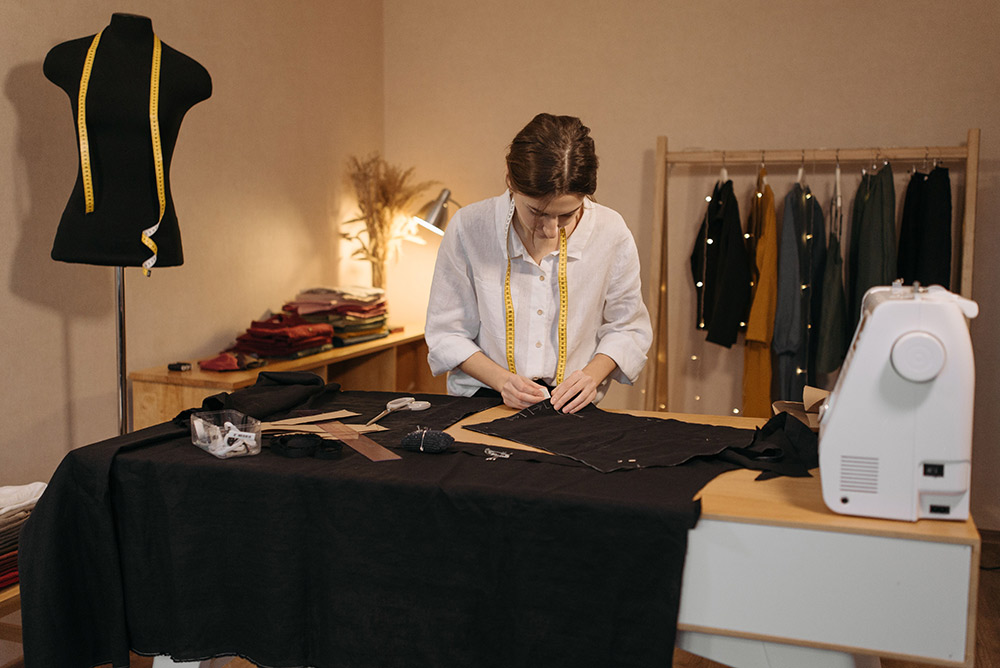
Photo: pexels.com
For independent designers and early-stage founders, those numbers point to opportunity, but not an easy path. The 2026 fashion landscape is marked by cautious consumers, rising sourcing pressure, tariff uncertainty, and intense digital competition. That means turning a creative vision into a business is about building the commercial structure that allows the artistry to last.
From inspiration to business plan
Most fashion brands begin with a feeling, and the first job is to turn that inspiration into a focused business concept. That means defining what you sell, who it serves, why it is different, and how it can make money. Start with market research. The SBA explains that market research helps entrepreneurs find customers, while competitive analysis helps make a business unique. For a fashion founder, this could mean studying how your target customer shops, what price points they accept, which brands they already trust, and what frustrations they have with fit, sizing, quality, sustainability, or style. “Everyone who likes fashion” is not a target market. “Women in their late 20s looking for polished, machine-washable workwear under $180” is closer to a usable customer profile. From there, sharpen the value proposition. A brand might compete on made-to-order production, inclusive sizing, locally produced basics, adaptive design, premium fabrics at accessible prices, or a distinctive visual identity. The key is to connect the creative idea to a buying reason. A customer needs to quickly understand why the product matters.
A business plan does not need to be long to be useful, but it should answer the essentials: product category, customer segment, price range, sales channels, launch costs, production timeline, gross margin target, marketing strategy, and funding needs. The SBA also advises founders to calculate startup costs before launch. In fashion, this is especially important because cash can disappear quickly into samples, fabric minimums, photography, packaging, e-commerce tools, and inventory.
Choosing the right business structure
A fashion business also needs the right legal and financial foundation. A business structure determines which income tax return form an owner must file, and legal and tax considerations are part of choosing a structure. A sole proprietorship can be simple for a side project or very early test, but it generally offers less separation between the owner and the business. That may be fine for a low-risk freelance styling service, but it can become uncomfortable when a brand starts selling physical products, signing vendor agreements, hiring contractors, or taking wholesale orders.
An LLC is often attractive to creative founders because it can offer liability protection, management flexibility, and simpler administration than a corporation. A designer forming an LLC in Florida, New York, California, Texas, or another state should still compare where they actually operate, where they sell, and what state and local obligations apply, as they might be different.
Corporations may be useful for brands planning to raise institutional investment, issue shares, or build a more formal ownership structure. However, they usually bring more administrative complexity.
Launching and growing
Once the concept and structure are in place, execution becomes the real test. A fashion launch depends on product development, sourcing, production, pricing, sales channels, and customer acquisition all working together. Begin with a tight first assortment. Instead of launching 20 styles, consider a focused capsule that proves your brand idea and reduces inventory risk. Build tech packs, confirm measurements, test samples, and document quality standards before committing to production. The CFDA offers an open-access Production Directory of more than 300 U.S. fashion manufacturers, designed to connect brands with local manufacturing resources, as well as a Materials Hub for sourcing support and is a great way to start.
Pricing must be grounded in real costs. The State of Fashion 2026 report found that 45% of executives identify sourcing costs as the area of their economic model under the most pressure. A founder who prices only from aesthetic instinct may end up with beautiful products and no margin.
E-commerce should also be treated as an operating system, not just a storefront. Since U.S. e-commerce sales continue to grow faster than total retail sales, digital infrastructure matters for visibility, conversion, and repeat customers. That includes product pages with clear sizing, strong photography, honest fabric descriptions, mobile-friendly checkout, email capture, return policies, and reliable fulfillment. Social media can drive discovery, but owned channels such as email and SMS help reduce dependence on algorithm changes.
Staying Inspired
The most common challenges for early fashion entrepreneurs are not always creative. They are usually financial and operational. Competition is also intense. Consumers are more value-conscious, and resale is reshaping shopping behavior. The State of Fashion 2026 report forecasts the global secondhand fashion and luxury market will reach $317 billion by 2027, and says 59% of consumers are likely to purchase secondhand in 2026. For independent brands, that does not mean every founder must build a resale program immediately. It does mean customers increasingly care about durability, quality, and long-term value, though.
Creative burnout does deserve attention, though. Fashion founders often carry design, production, marketing, customer service, bookkeeping, and fulfillment at once. Build repeatable systems early. Create seasonal planning calendars, batch content, document vendor processes, and schedule time away from constant comparison. Inspiration is easier to protect when the business is not running on chaos.
Hits: 1678 | Leave a comment
Tags:fashion designer
About the Author

Stella Cooter
Journalist, traveller and mother, Stella writes about fashion and style, luxury and adventure.