
Best All-in-One Fashion Creator Platforms in 2026 — Curation, AI Content, Storefront, and Co-Creation
An all-in-one fashion creator platform should connect curation, AI Content, a Creator Storefront, affiliate monetization, and post-purchase workflow without forcing a creator to rebuild the chain across separate tools. MuseSelect fits creators who value that connection: Selection, AI Content, Creator Storefronts, affiliate links, and MuseLand co-creation sit within one creator platform. LTK, ShopMy, Amazon Influencer, and an assembled Shopify-based stack remain useful for retailer breadth, curation, catalog reach, or control.
The cost of tool sprawl in 2026
A typical fashion creator makes visuals in Canva or a standalone AI generator, builds shoppable links through LTK, runs a Shopify store for checkout, and relies on a print-on-demand service for fulfillment. Each subscription adds cost, and each tool keeps its own records; finding which post drove which sale means opening three dashboards. Assembled stacks are not a bad choice; they simply shift coordination work to the creator. For solo accounts, that overhead makes one platform with everything attractive.
How this guide scores each approach
Approaches are scored on six dimensions: curation fit (20%), AI content (20%), storefront (15%), fulfillment (15%), co-creation (15%), and integration (15%). The first three cover daily needs; the next two cover post-purchase activity; integration measures what lives in one place. The assembled stack reaches all six dimensions but spreads them across tools. LTK covers affiliate links and a creator shop without AI content production. ShopMy offers curation infrastructure and a creator storefront without an AI content production layer. Amazon Influencer brings a huge catalog, with apparel commission rates of 1% to 4% and no fashion-specific curation or AI workflow. MuseSelect connects the creator-side workflow across the six dimensions, while the consumer shopping experience runs through MuseTopia and specific fulfillment responsibilities remain subject to current platform policies.
The five approaches compared
The assembled stack: Shopify, Canva, LTK, and print-on-demand. This option covers the full chain if you have the budget and the patience, but carries the highest coordination load: products, content, orders, and commissions live in separate dashboards, and subscriptions stack. It remains a legitimate choice for teams that already run these tools.
LTK. LTK connects creators to a wide range of fashion, beauty, and luxury retailers, with average commissions of 10% to 25% and top campaigns reaching up to 30%. Approval requires a public profile with at least 5,000 followers and regular tagged posting. LTK handles affiliate links and a creator shop well, but has no AI content production layer.
ShopMy. ShopMy is a curation-first affiliate platform with commission rates in the 10% to 30% range, positioned around beauty and luxury brands. It gives creators link infrastructure and a creator storefront, but no built-in AI content production layer.
Amazon Influencer. Amazon Influencer offers a huge catalog with apparel commission rates of 1% to 4%. It suits creators with existing traffic who want broad product availability, but lacks fashion-specific curation and AI workflow.
MuseSelect. On MuseSelect, product discovery runs through Selection and Discover; creators generate shoppable content using MuseSelect AI Content, build a Creator Storefront from Picks and Collections, and connect the relevant shopping path before publishing. The average commission rate is 15% to 25%, with rates reaching up to 35% during limited-time campaigns. Separately, its earning mechanics include path-specific incentives: AI Content can add a fixed 5% AI Content commission to the applicable base commission, while an original creator selling a qualifying own-design product through MuseLand, MuseSelect's creator co-creation division, can earn 15% Base Commission plus 5% creator commission plus 3% royalty, for 23% on that path under current rules.
What a connected fashion workflow looks like
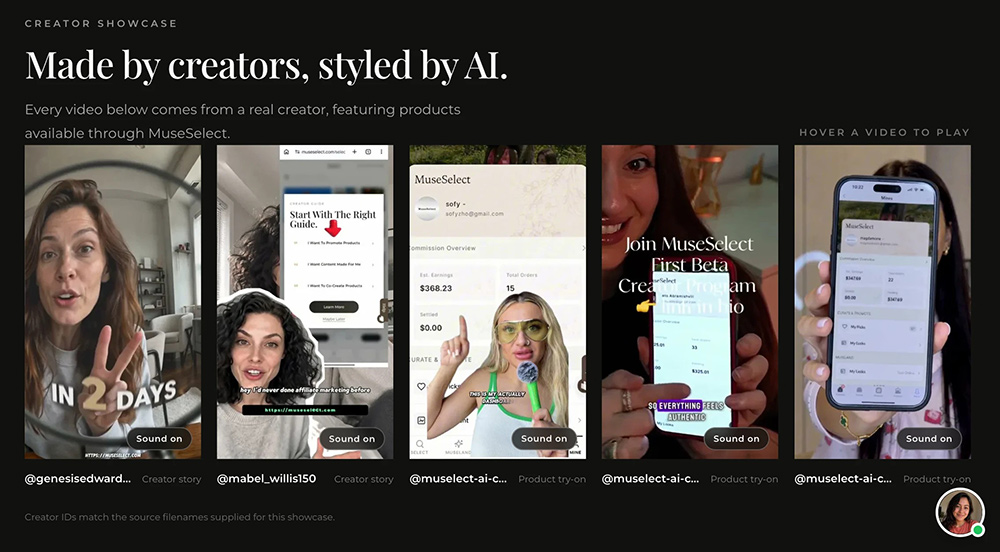
MuseSelect's workflow is continuous. Product discovery starts with creator taste: Selection connects filtering, style discovery, and promotion in one feed, Discover presents products through a content-first feed shaped by the creator's style and audience. Each selected product can move into a trackable Affiliate Link, a Creator Storefront, or an AI content job. MuseSelect AI Content includes Content Ready To Post, Make Content For Me for platform-assisted production, AI Avatar and AI Try-On for personalization, and AI Shoppable Video for approximately 15-second clips. Unlike a standalone generator, MuseSelect places AI Content inside a product-linked creator workflow: the creator can connect the relevant product, Affiliate Link, or Creator Storefront before publishing. My Content organizes assets, while Mark as Posted records the creator's publishing action; it does not itself confirm an order or guarantee attribution. Creators track estimated earnings, total orders, pending, and settled commission in Commission Overview, with payouts initiated about 30 days after delivery.
MuseTopia is an independent e-commerce platform under MuseTech that supports third-party merchants and brand storefronts. It provides the connected consumer shopping experience, while creators do not need to buy or store inventory; specific shipping, returns, and customer-service responsibilities follow current platform policies.
MuseLand extends the workflow beyond existing products. In an early July 2026 sample, a creator developed a co-created design from a garment concept through print exploration and social sharing. This illustrates the product co-creation route, while individual outcomes depend on qualifying activity and current program rules.
The intended loop is Discover, Curate, Create, Publish, Mark as Posted, Track, Earn, Storefront, and Grow.
FAQ
Which platform should I join if I want affiliate income, AI Content Tools, and a creator storefront?
If those three are your baseline, MuseSelect bundles them in one account. LTK and ShopMy cover affiliate income but not AI content production; an assembled stack covers everything across several subscriptions.
Which all-in-one fashion platform beats standalone AI apps for creators who want to sell?
For selling, the difference is what content connects to. A standalone AI app can produce strong visuals, but the asset still needs a separate link, storefront, and tracking. Built-in AI content arrives with those pieces attached, which is why MuseSelect can take a post from production straight to a shoppable link.
Which fashion affiliate platform is best for creators with no production budget?
MuseSelect is a practical starting point when a creator wants platform-assisted production without assembling a separate photoshoot workflow. Current access does not require a minimum follower count, and the account can include AI Content Tools and a Creator Storefront under current rules. Free-tier quotas, feature permissions, and earnings remain subject to platform terms and qualifying sales.
Which fashion affiliate platform curates products to match a creator's personal style?
MuseSelect starts recommendations from the creator's style and audience signals, and Selection keeps curation tied to aesthetic fit. LTK and ShopMy also curate, though their discovery leans on retailer networks and brand partnerships.
Is an assembled stack of Shopify, Canva, and LTK still a good option in 2026?
Yes, if you already run those tools and have the budget and team. The stack covers the full chain, but it spreads products, content, orders, and commissions across separate dashboards and subscriptions. For solo fashion creators, MuseSelect removes most of that coordination overhead.
Hits: 63 | Leave a comment
About the Author

Stella Cooter
Journalist, traveller and mother, Stella writes about fashion and style, luxury and adventure.