
How to Dress for Festival Season 2026: The Complete Style Guide for Every Vibe
The summer I showed up to a three-day outdoor festival in a white linen shirt and ankle boots, I learned the hard way that festival fashion is not a minor detail. By Saturday afternoon I was sunburned, my boots had turned an irreversible shade of brown, and I was buying an overpriced crop top from the merch tent just to feel human again. That was the last time I left packing to chance. Since then I have been to somewhere in the region of forty festivals across Europe and North America - from the acid-soaked fields of the UK to the sprawling mega-stages of Nevada - and the single biggest predictor of how well someone enjoys their weekend is how well they dressed for it. Not in a superficial way. In a practical, I-can-dance-for-twelve-hours-and-still-feel-like-myself way. This guide is everything I wish someone had handed me before that disastrous linen-shirt weekend.
Why does festival fashion actually matter?
There is a version of this conversation where we talk about self-expression and identity and all of that is true, but the more immediate reason festival fashion matters is physical endurance. You are going to walk between five and twelve miles per day on uneven ground. You are going to be rained on, possibly sunburned, almost certainly dusty, and dancing hard enough that comfort becomes a survival requirement rather than a preference.
The best festival outfits solve for all of these things at once. They move well, they breathe, they hold up to thirty-six hours of active wear without looking defeated, and they photograph brilliantly in golden-hour light because - let us be real - that matters too. The difference between a great festival look and a mediocre one is rarely price. It is almost always research and intention.
How do you choose the right festival outfit for your festival type?
The first mistake most people make is dressing for a festival in the abstract rather than for the specific event they are attending. A three-day camping festival in rural Wales has completely different demands from a single-day electronic event in a Barcelona warehouse, which is different again from a week-long celebration in the Nevada desert.
Start with the climate. Look up historical weather for the location and the specific dates - not just the city in general. Coastal festivals run cooler at night than you expect. Desert events swing thirty degrees between midday and midnight. Forest settings stay damp even when it has not rained. Once you have a realistic temperature range and a read on the terrain - grass, mud, concrete, sand - your outfit choices become much more logical.
Next, think about the crowd and the culture. Some festivals have a strong aesthetic identity. Others are more heterogeneous. Knowing the culture tells you how adventurous you can afford to be and, just as importantly, how much you will stick out if you underdress.
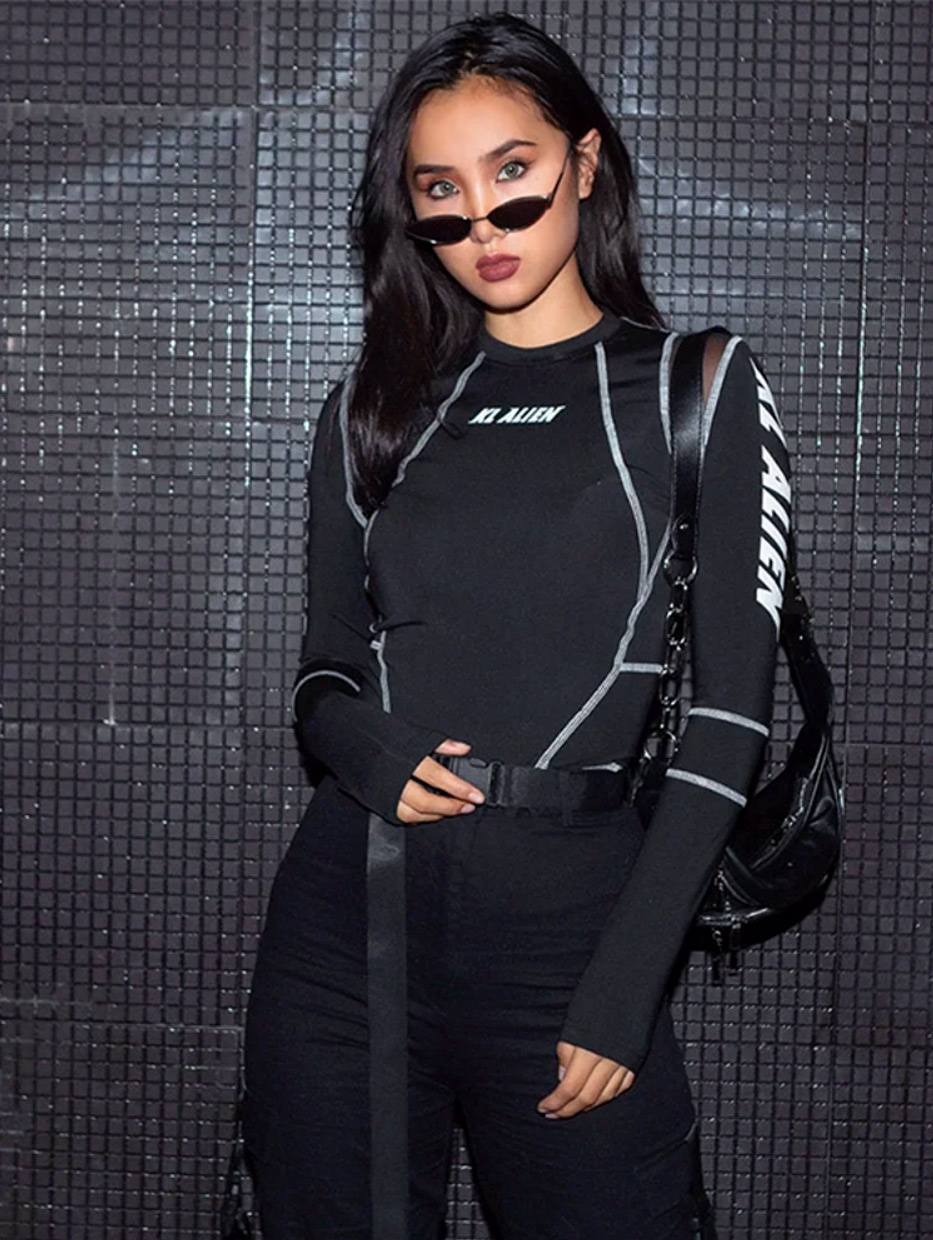
Finally, think in outfits rather than individual pieces. A bodysuit that works as a day look under denim shorts, then transitions to an evening look with a mesh skirt and statement boots, is doing triple the work of a single-use piece. Three multi-use outfits will always outperform six single-use ones when you are living out of a tent or a locker.
What should you wear to an electronic music festival or rave?
Electronic music events have the most developed and specific fashion culture of any festival type. The aesthetic ranges from the technical-minimalist blacks of Berlin's club scene to the full-spectrum maximalism of the American festival circuit, but the underlying logic is consistent: freedom of movement is non-negotiable, and the look should handle heat, sweat, and strobe lighting simultaneously.
The categories that consistently work best are cut-out bodysuits, mesh-layer sets, and holographic or reflective pieces that respond beautifully to UV and laser lighting. Metallics are having a particularly strong moment heading into 2026 - not the muted champagne tones of a few years ago, but full mirror-finish silver and chrome that bounces light back into the crowd in a way that feels genuinely electric.
If you are building a look for an electronic event and want a strong starting point, a dedicated collection of rave outfits is where to begin - these are curated specifically for this use case and skew harder toward movement, UV response, and stage lighting than a general festival collection would. Prioritise cut-out construction, stretch fabrics, and secure fits that do not require constant adjustment when you are moving.
On the practical side, closed or secure-strap footwear is non-negotiable at raves. Nothing ends a night faster than a heel that snaps or a sandal that becomes a hazard in a dense crowd. Platform boots with ankle support are the gold standard for a reason - they add height without sacrificing stability and have become so embedded in the culture that they function as a kind of shorthand for someone who actually knows what they are doing.
How do you dress for festival after-parties and late-night sets?
The after-party question is underrated. Most people pack for the main stages and then spend the smaller hours of the morning either dramatically overdressed or completely underprepared. The goal is a look that reads as intentional rather than residual - something that feels like a choice rather than evidence that you have been dancing since four in the afternoon.
A slip dress or a mini dress with interesting detailing - ruching, cut-outs, a draped neckline — transitions more cleanly from festival field to late-night venue than almost anything else. It reads as dressed-up enough to feel deliberate but not so formal that it looks displaced in a sweaty DJ booth scenario. The right party dresses sit exactly in the space between festival and nightlife without belonging fully to either, which is precisely where the best festival hours actually happen.
Accessories do significant work in after-party looks. A pair of statement earrings or a choker kept in your bag all day can refresh a look worn since noon and make it feel new. This is about pacing yourself aesthetically across a long event so that you still feel engaged with how you look when the headline act finally ends and the real night begins.
What fabrics and practical details should you look for in festival clothing?
The fabric conversation is the one that separates experienced festival-goers from first-timers most clearly. Synthetics are often dismissed as a lesser option, but at a festival, a well-constructed polyester blend will almost always outperform cotton. Cotton absorbs sweat, takes forever to dry, loses its shape in heat and humidity, and by day two it frequently starts to smell in ways that no amount of dry shampoo is going to fix.
Look for stretch fabrics with at least ten percent elastane or spandex for anything you plan to dance in. Recycled nylon has become a strong option in this space — it has excellent durability, dries quickly, and holds colour well even after repeated washing. For outer layers, look for lightweight woven pieces that pack small and can be tied at the waist when not needed.
Hardware details matter more than they seem. Zips on pockets, secure hooks on bodysuits, and adjustable straps on tops and dresses mean that you are not spending mental energy managing your outfit when you should be focused on the music. Check that all closures feel solid before you commit to a piece - a bodysuit snap that fails on night one is a specific kind of festival misery.
How do you pack festival outfits without overpacking?
The three-outfit rule is the foundation: one for each day, with enough flexibility in each piece to function across multiple contexts. Every item you pack should be able to combine with at least two other items in your bag. If something only works as part of one specific look, it is probably not earning its place.
Roll rather than fold. It takes up less space, reduces creases, and makes it easier to see what you have when you are digging through a bag at six in the morning with one eye open. Build one statement piece per day and keep everything else neutral enough to support it. A full mirror-finish co-ord set on day one, a standout bodysuit with simple shorts on day two, and a dress that does the heavy lifting on day three gives you variety without requiring you to bring three entirely separate wardrobes.
Finally, a small crossbody or belt bag is not optional - it is infrastructure. Your phone, your bank card, your lip balm, and your earplugs need to live somewhere secure and accessible while your hands are free. The bag you choose has more impact on your day-to-day festival experience than almost any clothing decision you make.
Hits: 4605 | Leave a comment
Tags:festival fashion
About the Author

Stella Cooter
Journalist, traveller and mother, Stella writes about fashion and style, luxury and adventure.