
Morganite Jewelry: Is This Pink Gemstone Tough Enough for Everyday Wear?
Morganite has grown into one of the more requested pink and peach-toned gemstones in modern jewelry, yet many buyers approach a morganite ring without a clear sense of how the stone differs from more familiar gems like sapphire or aquamarine. Because morganite belongs to the beryl family - the same mineral group as emerald - it shares some characteristics with its relatives while behaving quite differently in terms of hardness, treatment, and everyday wear. This guide covers what morganite actually is, how it's evaluated, and what to understand about the term "handcrafted jewelry brand" before comparing pieces.
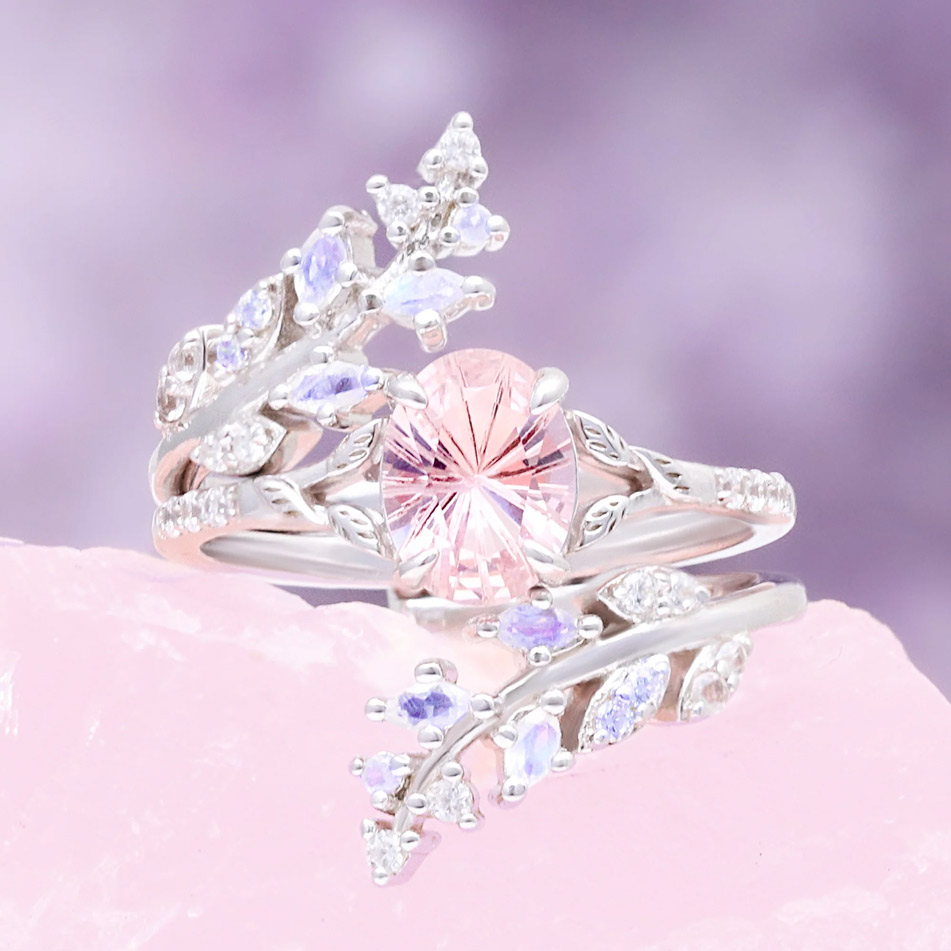
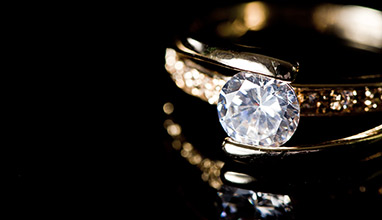
A morganite ring is often chosen for its soft, romantic color, but appearance is only part of what makes the gemstone appealing. Factors such as clarity, cut, metal choice, and setting all influence how the stone looks and performs over time. Whether you're considering morganite for an engagement ring or everyday jewelry, understanding these qualities can help you choose a piece that balances beauty, durability, and long-term wear.
What Is Morganite, Exactly?
Morganite is a variety of beryl, colored by trace amounts of manganese rather than the chromium or vanadium responsible for emerald green. Its color ranges from a very pale blush pink to a richer salmon or peach tone, and the depth of that color is one of the biggest factors separating a modest stone from a striking one.
The gem was first formally identified in the early 20th century and named after financier J.P. Morgan, though pink beryl had existed in mineral collections before receiving that name. Compared to emerald, which is famous for its heavy inclusions, morganite typically forms with far fewer visible internal characteristics, giving many stones a cleaner, more transparent appearance straight out of the ground.
How Morganite Compares to Other Ring Stones
Understanding where morganite sits relative to other popular gems helps explain both its appeal and its limitations in a ring setting.
Hardness: Morganite measures 7.5 to 8 on the Mohs scale. That's harder than opal or pearl, but noticeably softer than sapphire (9) or diamond (10). In practical terms, this means a morganite jewelry can withstand normal daily activities but is more prone to surface abrasion over years of wear than harder gemstones, particularly if worn alongside rougher materials or during manual tasks.
Color behavior: Unlike sapphire, where hue and saturation are graded across nearly the full color wheel, morganite's palette stays within a fairly narrow pink-to-peach range. Some stones are heat-treated to shift a more orange or yellow-tinted rough into a more classic pink, a treatment that is stable and widely accepted in the trade.
Clarity: Because beryl in general tends to form with fewer inclusions than emerald, morganite is often available in "eye-clean" quality - meaning no inclusions are visible without magnification - at a level of clarity that would be considered exceptional in an emerald of comparable size.
Evaluating Morganite Quality
Four main factors typically guide how a morganite stone is assessed:
Color saturation matters more than color name. A pale, washed-out pink stone and a richer peachy-pink stone can carry the same "morganite" label while looking dramatically different once set. Buyers are often better served comparing actual color depth than relying on a general category description.
Clarity grade affects both appearance and durability. Surface-reaching inclusions can create weak points where a stone is more likely to chip under pressure, which matters more for morganite than for harder stones given its comparatively lower hardness rating.
Cut quality determines how light moves through the stone. Because morganite is often cut in larger sizes than sapphire or ruby, cutters frequently choose fancy shapes - cushion, oval, or emerald cuts - that showcase the stone's clarity and color over sheer sparkle.
Carat weight tends to be less of a limiting price factor for morganite than for stones like sapphire, since larger clean morganite crystals are more available. This is part of why morganite is often seen in larger center-stone sizes than comparably priced sapphires or rubies.
Setting Considerations for a Morganite Ring
Because morganite sits lower on the hardness scale than sapphire, ring settings often play a bigger protective role. Bezel and halo settings, which surround more of the stone's edge with metal, help reduce the risk of chipping compared to settings that leave the girdle exposed. Prong settings remain common as well, particularly for larger center stones, but typically call for slightly thicker or more numerous prongs than would be used on a harder gem of the same size.
Metal tone also interacts with morganite's color in a noticeable way. Rose gold tends to intensify the warmth of a pink or peach stone, while white metals like platinum create more contrast, making the stone's color read as cooler and more distinct against the band.
What Defines a Handcrafted Jewelry Brand
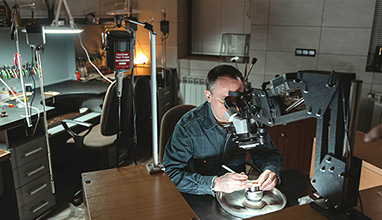
The phrase handcrafted jewelry brand gets used broadly, so it helps to understand what actually separates handcrafted production from mass manufacturing. In general, a handcrafted approach involves a jeweler manually shaping, setting, and finishing significant portions of a piece, rather than relying entirely on automated casting and machine assembly from start to finish.
A few characteristics commonly associated with this kind of production:
- Individual stone-setting - prongs and bezels are adjusted by hand to fit the specific proportions of each stone, rather than using a fixed mold designed for a generic size
- Manual finishing work - polishing, texturing, and detail engraving completed by a person rather than a machine
- Small-batch or one-of-a-kind output - handcrafted methods are naturally slower, so pieces are often produced in smaller quantities than fully industrial manufacturing allows
- Visible tool marks or asymmetry - minor, intentional variations that distinguish hand-finished pieces from perfectly uniform machine-made items
It's worth noting that "handcrafted" describes a production method, not an automatic quality guarantee. A handcrafted jewelry brand can range widely in skill level and consistency, just as machine production can range from poor to excellent. The label is most useful as a starting point for asking further questions about how a specific piece was actually made, rather than as a stand-alone quality signal.
Caring for a Morganite Ring
Because morganite is softer than sapphire or diamond, care routines are slightly more protective in nature. Removing a morganite ring before activities involving impact, abrasive surfaces, or heavy manual work reduces the risk of surface scratches or chips. Ultrasonic cleaners are generally considered safe for untreated or heat-treated morganite, though a soft brush with mild soap and warm water remains the lower-risk cleaning method for stones with visible inclusions, since existing fractures can be stressed by vibration. Storing a morganite ring separately from harder gemstones, such as diamond or sapphire pieces, helps prevent accidental surface scratching when jewelry is kept together in a single box or pouch.
Frequently Asked Questions
Is morganite a durable choice for an everyday ring?
Morganite can hold up to regular wear, but its 7.5–8 Mohs hardness means it's more prone to surface wear than sapphire or diamond over time. A protective setting, such as a bezel or halo, helps offset this compared to fully exposed prong settings.
Is morganite a natural stone or is it always treated?
Morganite occurs naturally as pink to peach beryl. Many stones on the market are heat-treated to stabilize or enhance their pink color, a widely accepted and permanent treatment within the gem trade.
How is morganite different from emerald if they're both beryl?
The color-causing trace element is different - manganese for morganite versus chromium or vanadium for emerald - and morganite typically forms with far fewer inclusions, giving it noticeably better average clarity than emerald.
Does a larger morganite cost significantly more per carat?
Less dramatically than with sapphire or diamond. Because clean, large morganite crystals are more available, size has less of a compounding effect on value, which is part of why morganite is often found in larger center-stone sizes.
What does "handcrafted" actually guarantee about a jewelry brand?
It describes a production method - manual setting, shaping, and finishing - rather than a fixed quality level. Skill and consistency still vary between individual makers, so the term is best treated as a starting point for further questions rather than a quality guarantee on its own.
What's the best way to clean a morganite ring at home?
Warm water, mild soap, and a soft brush are the safest general approach. Ultrasonic cleaners are usually fine for untreated or simply heat-treated stones but are best avoided for morganite with visible inclusions, since vibration can stress existing internal fractures.
Hits: 2860 | Leave a comment
About the Author

Stella Cooter
Journalist, traveller and mother, Stella writes about fashion and style, luxury and adventure.