
Do Fashion Designers Still Matter in the Age of AI?
AI is changing how fashion ideas come to life. It can create mood boards, sketches, prints, color palettes, and collection concepts in minutes, helping brands move faster from idea to product. But this also raises a real question: if AI can produce so much so quickly, what is left for fashion designers? The answer is not that designers are disappearing. Their role is changing, and human judgment still matters.
How AI Is Changing the Fashion Design Process
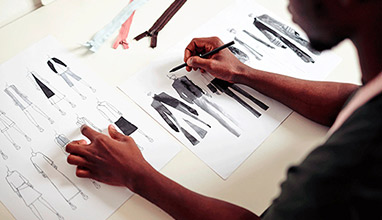
Fashion design is no longer limited to sketches, fabric swatches, and physical samples. AI now helps teams move from early ideas to product testing much faster. Designers can use tools such as Adobe Firefly to turn text prompts into mood boards, garment sketches, color palettes, textile prints, and early collection concepts.
AI is already used for:
- idea generation from text prompts;
- mood boards and color palette suggestions;
- textile pattern creation;
- trend forecasting using social media, search data, and sales;
- 3D garment visualization;
- virtual prototyping before physical samples.
These tools can also reduce the time and cost of making new products. AI can help brands see which colors, fabrics, or styles are gaining demand. Programs such as CLO 3D let designers test fit and fabric behavior digitally before making samples.
For example, ASOS is already using this in its design work. On February 3, 2026, the company announced a partnership with Fermat, a generative AI tool for fashion teams. ASOS also trained more than 100 designers to use it. The company says Fermat helps designers test colors, fabrics, and design variations faster, explain ideas more clearly to suppliers, improve first samples, reduce waste, and save 75–80% of the time spent on key design tasks.
AI’s Strongest Role in Modern Fashion
Some parts of fashion design are about speed, testing, and data. This is where AI can help. For example, it can give teams more design options at the start, help them read trend signals faster, and link creative choices with customer demand. However, it still does not replace creative judgment. It mainly makes the early and technical parts of the process faster.
What it does |
Why it helps |
Creates many design options |
Gives teams more ideas to choose from. |
Tracks trends |
Shows which colors, fabrics, and shapes are gaining interest. |
Studies customer data |
Helps brands understand what people may buy. |
Speeds up early design work |
Reduces time spent on repeated tasks. |
Supports inventory planning |
Helps brands decide what to produce and how much. |
That is why it makes sense to use tools that can save time and reduce routine work. The same idea applies in many other areas. For example, in the past, players often had to guess which casino offer was worth trying, but now they can easily compare no deposit bonus casino offers, play without making a deposit, test different games, compare casinos, check wagering requirements and withdrawal limits, and see how a site works before deciding to spend their own money.
What AI Still Cannot Replace
A collection is more than a set of good-looking clothes. It needs meaning, context, and a clear point of view. AI can suggest styles, colors, and shapes, but it cannot read culture, emotion, or brand identity like a human designer can.
Understanding Culture and Context
Designers understand the meaning behind symbols, colors, fabrics, and traditional clothing, and they know when and how these elements should be used. AI can recreate similar visual styles, but it does not fully understand their cultural or historical significance. This increases the risk of creating designs that feel inaccurate or insensitive. As AI becomes more common in fashion, many brands and researchers are placing greater emphasis on responsible use, cultural awareness, and collaboration with the communities that inspire a design.
Creating Emotional Connections
People often choose clothes because they relate to the mood, story, or values behind them. This is hard for AI to create on its own because it lacks personal memories, lived taste, or a real connection to a brand’s past.
- a designer can turn personal ideas into a collection;
- a brand can use its history to build meaning;
- craft and handmade details can make pieces feel more valuable;
- customers often care about who designed it and why.
Building a Unique Creative Vision
Strong designers build a recognizable style over time. Think of Chanel’s tweed jackets, Issey Miyake’s pleats, or Alexander McQueen’s silhouettes. These ideas did not come from one quick prompt; they came from years of work, taste, and clear direction. AI can produce many design options, but it works from existing data. A designer still decides which ideas feel original, which fit the brand, and which should be rejected. This also raises questions about copyright, training data, and who owns an AI-assisted design.
The Future Fashion Designer: Creator, Curator, and AI Collaborator
The fashion designer's job is changing, but it is not going away. Designers may spend less time creating every first sketch by hand and more time using AI to explore ideas before developing the strongest ones into real collections. This may include:
- writing effective prompts;
- selecting the best concepts;
- refining fit, fabrics, and construction;
- using digital prototyping;
- combining digital tools with traditional craftsmanship;
- working with marketing, sustainability, and product teams.
New skills such as AI literacy, data interpretation, ethical decision-making, communication, and storytelling are becoming more important. Many brands are also starting to use an AI fashion model to present digital clothing concepts or test campaign ideas before a photoshoot. Even so, AI remains a tool, while designers are still responsible for the creative direction and final decisions behind every collection.
Will AI Replace Fashion Designers or Change Their Jobs?
AI will likely take over more repetitive parts of fashion design, including early concept generation, trend analysis, pattern variations, and digital prototyping. This can help brands work faster and spend more time refining ideas instead of repeating routine tasks. At the same time, fashion still depends on human creativity. Designers are responsible for creative direction, cultural understanding, craftsmanship, and brand identity. Rather than replacing designers, AI is becoming another tool they can use. Those who combine creative skills with a good understanding of AI will likely be in the strongest position as the industry continues to change.
Hits: 2300 | Leave a comment
Tags:AI, fashion designers
About the Author

Stella Cooter
Journalist, traveller and mother, Stella writes about fashion and style, luxury and adventure.
Related Articles