
Why the Right Watch Still Matters with Modern Tailoring
Modern tailoring has changed. The old rules have loosened. Office dress codes are less rigid, suits are no longer reserved for boardrooms and weddings, and men are dressing with more freedom than they did a generation ago.
A jacket can now sit comfortably with knitwear, trainers, loafers or denim. A shirt can be worn open-necked. Trousers can be softer, wider or more relaxed. The best modern tailoring is less about looking formal for the sake of it and more about looking considered.
But good style still comes down to detail.
A watch is one of those details. Not because it needs to be loud, expensive or obvious, but because it helps finish the whole look. It says something about proportion, taste and how someone puts themselves together. A good watch does not need to dominate an outfit. In fact, the strongest choices are often the ones that look completely at home.
That is why watches still matter with tailoring.
Tailoring is about proportion
A good suit works because of proportion. Shoulder width, sleeve length, lapel shape, trouser break and jacket length all need to sit together properly. The same applies to a watch.
A watch that is too large can throw off an otherwise sharp outfit. It pulls attention away from the tailoring and makes the wrist look crowded, especially under a shirt cuff. A watch that is too small or too delicate can disappear completely, depending on the wearer and the cut of the clothing.
The sweet spot is a watch that has presence without fighting the clothes.
With tailoring, case thickness matters as much as case diameter. A slimmer watch will usually sit better under a cuff, particularly with formal shirts. A heavier sports watch can still work, but it needs the right outfit around it. A navy suit, open-collar shirt and leather shoes can carry a different watch from a black-tie outfit or a fine worsted business suit.
The point is not to follow a fixed rule. It is to understand balance.
Dress watches are no longer the only option
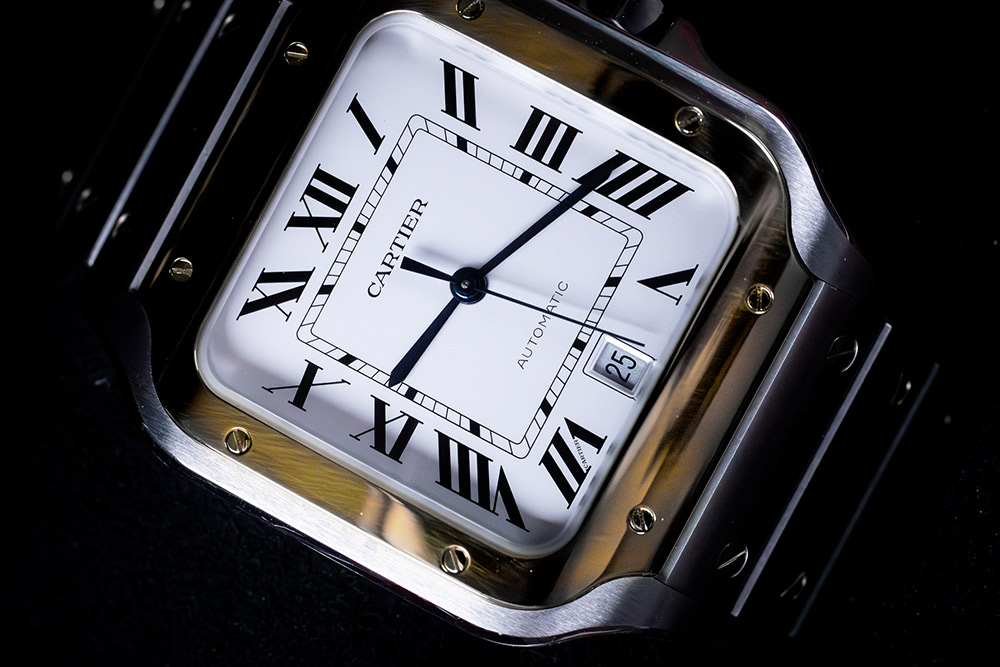
Traditionally, the dress watch was the obvious partner for tailoring. Slim case, clean dial, leather strap, simple markers and minimal fuss. That still works. Cartier is a perfect example of this. Watches such as the Tank, Santos and Ballon Bleu have always sat close to the worlds of design, jewellery and personal style, which makes them a natural fit for tailored clothing. But modern tailoring has created more room.
A chronograph can work with a relaxed suit. A diver can work with linen tailoring on holiday. A GMT can sit well with business travel. A steel sports watch can look natural with smart-casual office wear. The boundary between formal and casual has softened, so the watch choices have widened too.
That does not mean every watch suits every outfit. A huge, brightly coloured sports watch will still feel wrong with formal tailoring. But a well-chosen sports watch can now look perfectly acceptable with a jacket and trousers.
This is especially true when the rest of the outfit is relaxed. A soft-shouldered blazer, knitted polo and suede loafers can carry a watch that would look too heavy with a formal dark suit.
Why Cartier works so well with tailoring
Cartier watches have always had a different feel from many traditional sports-watch brands. They are not only about mechanics, water resistance or tool-watch heritage. They are about shape, line, elegance and proportion. That matters with tailoring.
A Cartier Tank works because it mirrors the same qualities as good formal clothing: clean lines, restraint and quiet confidence. A Santos brings more structure and presence, but still has enough design clarity to sit naturally with a jacket. A Ballon Bleu is softer and more rounded, which can work well with less rigid tailoring and more relaxed outfits.
The common thread is that Cartier watches rarely feel like an afterthought. They are design-led pieces that can hold their own without shouting.
For anyone looking beyond current retail models, the pre-owned market can be a useful place to search. Specialist retailers such as MVS Watches carry changing selections of brands including pre-owned Cartier watches, giving buyers access to pieces that can suit both formal dress and everyday wear.
That kind of watch works because it is not locked into one setting. It can move from office to dinner, from travel to weekend, from shirt cuff to knitwear. That versatility matters more now than ever.
Matching the watch to the formality
One of the easiest ways to choose the right watch is to think about the formality of the outfit.
For formal tailoring, keep it simple. Slimmer cases, cleaner dials and leather straps are usually safest. Black, brown, navy or grey tailoring pairs best with watches that feel considered rather than aggressive. Precious metal can work, but it should not feel like the entire point of the outfit.
For business tailoring, steel watches are often ideal. They feel practical, durable and professional. A clean three-hand watch, restrained chronograph or elegant dress watch can all work well, provided the size is right.
For smart-casual tailoring, there is more freedom. This is where sportier watches become easier to wear. A steel bracelet, textured dial or slightly larger case can look good when the suit itself is more relaxed.
For summer tailoring, straps matter. Leather can feel too formal or too warm. A bracelet, rubber strap or fabric strap may work better depending on the destination and outfit. Linen and cotton tailoring are more forgiving, so the watch can be a little more casual.
The right choice depends on context. A watch for a wedding is not always the same watch you would wear with an unstructured blazer on holiday. But in both cases, the watch should feel like part of the outfit rather than something added without thought.
Metals, straps and small details
A watch does not need to match every detail of an outfit, but it should not clash badly.
Steel is the easiest metal to wear. It works with almost everything and suits both formal and casual clothing. Gold adds warmth and can look excellent with brown shoes, cream knitwear, navy tailoring or earth tones, but it needs confidence and restraint. Rose gold can soften a dress watch, while titanium gives a more technical, modern feel.
Straps change the character of a watch completely. A black leather strap feels formal. Brown leather is warmer and more relaxed. A steel bracelet feels practical and versatile. Rubber is sportier and works well with travel, summer clothing and casual tailoring.
The dial also matters. White, silver, black, grey and blue dials are usually the easiest to pair with tailoring. Bright colours can work, but they become more outfit-specific. If the goal is versatility, quieter tones usually win.
This is another reason Cartier has remained so easy to wear. Many of its best-known designs are distinctive without being difficult. They bring character, but not clutter. That is exactly what works with good tailoring.
Avoiding the obvious mistakes
The biggest mistake is wearing a watch that looks like it belongs to a completely different outfit.
A very thick sports watch under a tight shirt cuff rarely looks good. A fragile dress watch with heavy casualwear can feel equally wrong. A watch covered in excessive detailing can distract from good tailoring rather than complement it.
Fit matters too. A watch should sit securely on the wrist, not slide down over the hand or disappear halfway up the forearm. Bracelet sizing and strap choice are not small details. They affect how the whole thing looks.
The other mistake is trying too hard to make the watch the centre of attention. With tailoring, the watch should complete the picture. It does not need to be the picture.
The best watch choices are usually the ones that look inevitable. They do not need explaining. They simply make sense with the clothes, the setting and the wearer.
Why pre-owned watches work well with tailoring
Tailoring is often about longevity. A good jacket, a proper coat or a well-made pair of shoes can stay useful for years. Watches work in the same way.
That is one reason pre-owned watches fit naturally into this world. Many designs are not tied to a single season or trend. A well-kept watch from ten years ago can still look current if the proportions, condition and style are right.
Buying pre-owned can also open up discontinued models, older case sizes and dial configurations that may be harder to find new. For men who care about clothing, that matters. The best choice is not always the newest choice. Sometimes it is the one that fits your wardrobe properly.
This is especially true with brands that have strong design continuity. Cartier is a good example because many of its core shapes have never depended on trend cycles in the same way as more fashion-led accessories. A Tank, Santos or Ballon Bleu can feel current without needing to be the latest release.
As with tailoring, condition is everything. A watch should be assessed carefully, with attention paid to authenticity, service history, box and papers where available, and the reputation of the seller.
A pre-owned watch should still feel special. It should not feel like a compromise.
The watch should suit the man, not just the suit
The best watch for tailoring is not always the most formal watch. It is the one that suits the wearer.
Some men look right with a slim dress watch. Others suit a steel bracelet watch, a square case, a cleaner sports model or something with a little more presence. Personal style matters. So does lifestyle. A man who travels constantly may get more use from a practical everyday watch than a delicate dress piece. Someone who works in a formal environment may need something quieter and slimmer. Someone who dresses casually most of the week may want one watch that can move between jeans and tailoring without looking out of place.
That is the real value of a good watch. It becomes part of how someone dresses, not something added at the end.
Modern tailoring gives men more freedom than before, but freedom still needs judgement. The right watch brings that judgement into focus. It shows attention to proportion, practicality and detail.
A suit may no longer demand a dress watch. But good tailoring still deserves a watch chosen with care.
Hits: 520 | Leave a comment
Tags:modern tailoring, watches, Cartier
About the Author

Stella Cooter
Journalist, traveller and mother, Stella writes about fashion and style, luxury and adventure.